This post may contain affiliate links. Please read our disclosure policy.
Every few years I take one of my kids on a one-on-one trip, but this time, I got to be the kid again! I spent 10 days in Morocco with my 82-year-old dad, and I can honestly say it completely stole my heart.
I first visited Marrakech years ago when I was modeling. As a relatively short flight from Paris and much of Europe, it had always been a brilliantly exotic destination for food, fashion, and culture. I’ve replayed those memories over and over throughout the years: tajines filled with vegetables, chicken, fish, and warm spices; souks selling bright textiles; history around every corner; the kindest people at every turn. Visiting more of Morocco had been on my wish list for a long time. Nothing could have prepared me for how magical, layered, and sensory-rich this journey turned out to be!
From the energy of Marrakech to the stillness of the Sahara, every stop felt cinematic in the best possible way. I left already dreaming about returning with my kids and husband to share the same experience.
Practical Tips Before You Go
Best time to visit: Morocco is beautiful year-round, but spring (March through May) and fall (September through November) offer the most comfortable temperatures. Summer in the Sahara is extremely hot.
Getting around: We traveled between cities by car, which let us take in the stunning landscapes, especially the drive through the Atlas Mountains. Hiring a local guide for each city made an enormous difference too. They know where to eat, what to skip, and how to navigate the medinas safely.
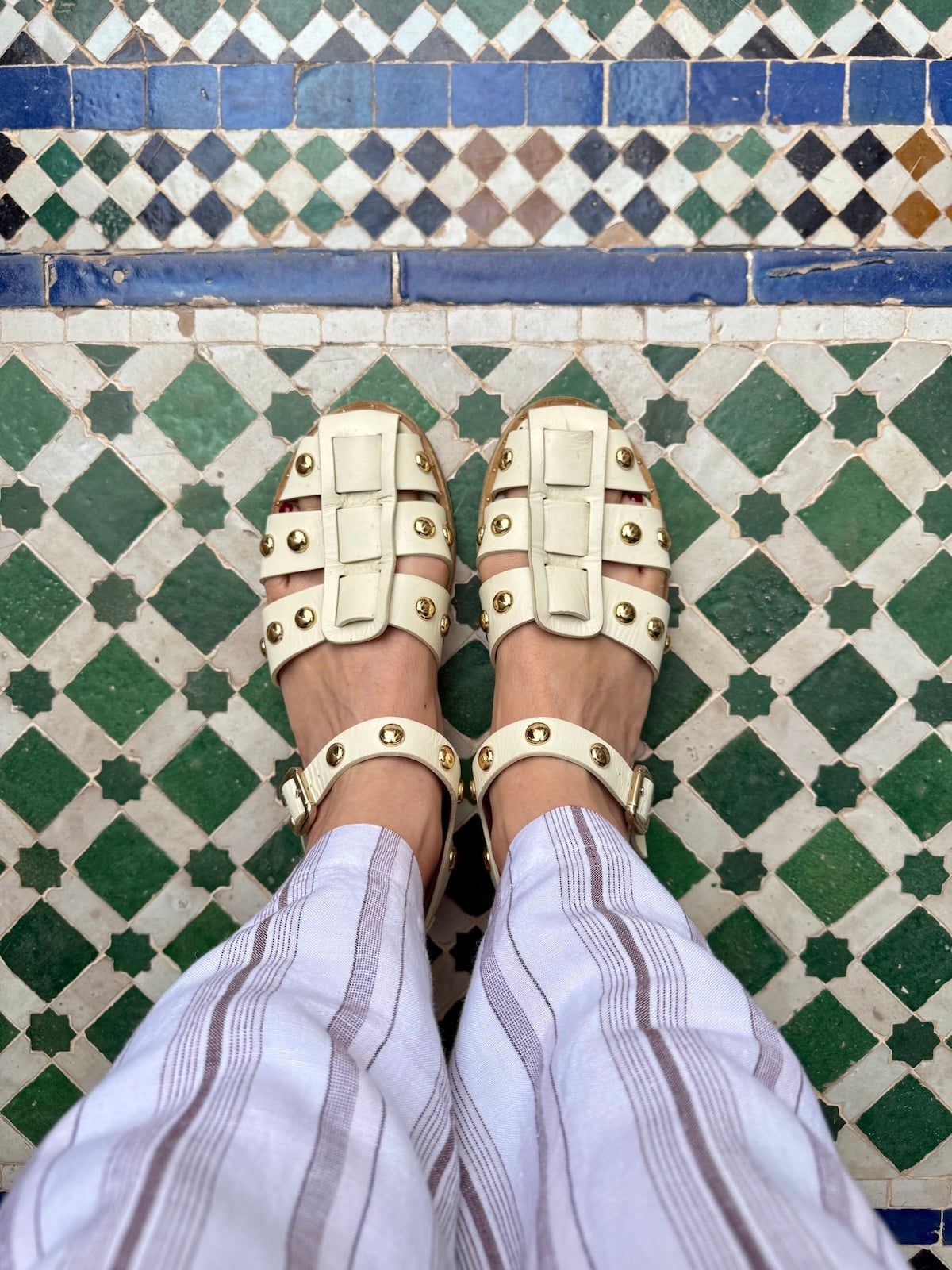
What to wear: Modest clothing is appreciated throughout Morocco, especially in religious sites. Comfortable walking shoes are a must! The medinas involve a lot of ground to cover on foot. (See exactly what I packed in the Shop My Morocco Looks section below.)
Packing tip for the Sahara: There’s no electrical service at the desert camp, so bring a portable charging bank for any electronics you need. Honestly, being unplugged left more time for taking in the magic of the desert.
Is Morocco good for kids? Absolutely. The Sahara camp, the Château Roslane winery with its beautiful grounds, Marrakech’s Selman hotel kids club, and the souks are all wonderful with children. A few spots in this itinerary are more suited to adults (long drives, late dinners), but the overall experience is rich and accessible for families. I’m already planning the return trip with the whole crew.
Casablanca: The Perfect Introduction to Morocco
We started in Casablanca, Morocco’s largest city and a sophisticated blend of old-world elegance and modern energy.
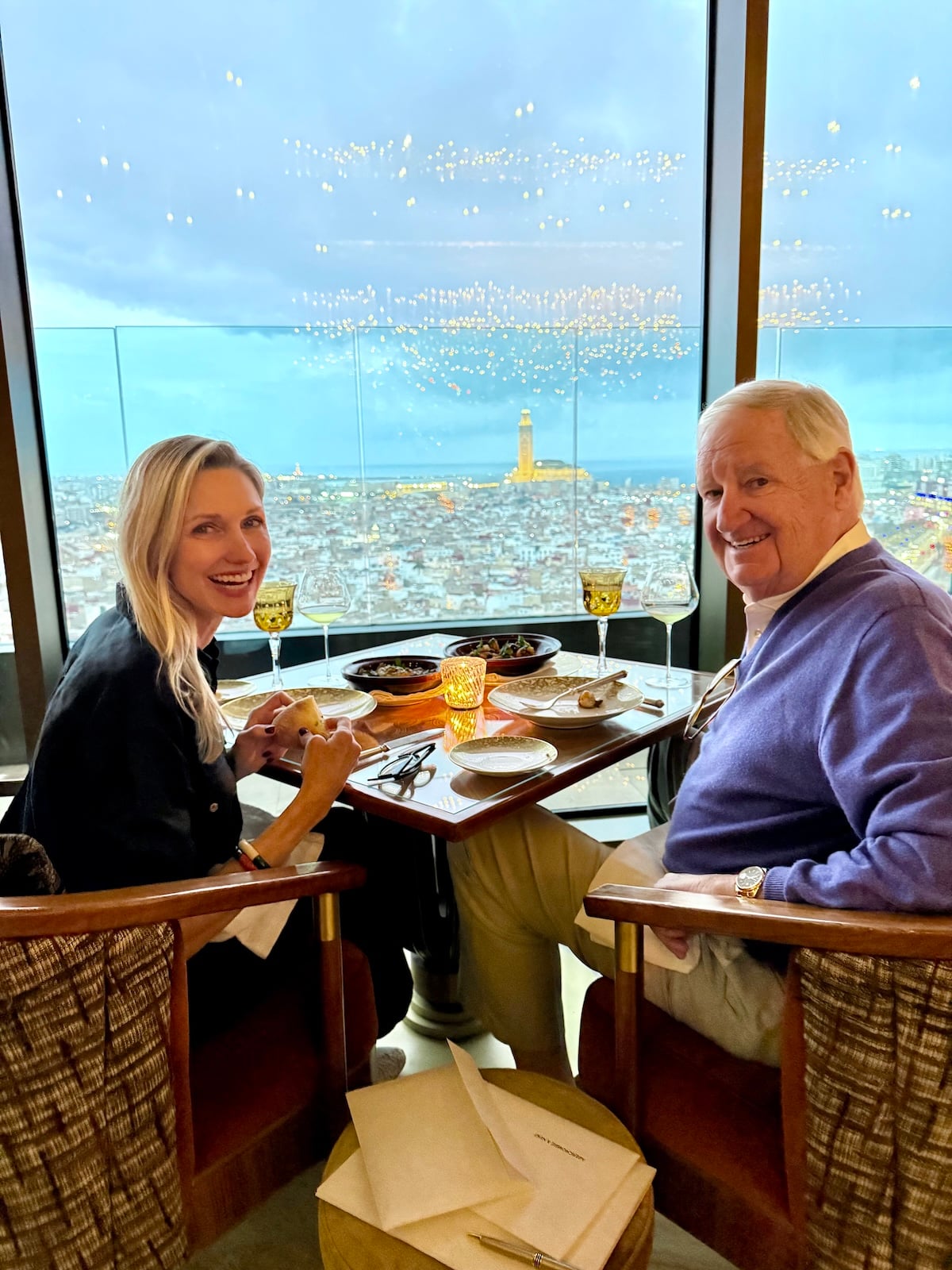
Our home base was the Royal Mansour Casablanca, where every detail felt thoughtful and luxurious without losing that distinctly Moroccan warmth. The craftsmanship throughout the hotel immediately sets the tone for the trip: intricate tile-work, carved wood, rich textiles, and impeccable hospitality. Our first night we stayed close to home and had dinner on the top floor at La Grande Table Marocaine. Not only was the food exquisite, but the view of the city was otherworldly.
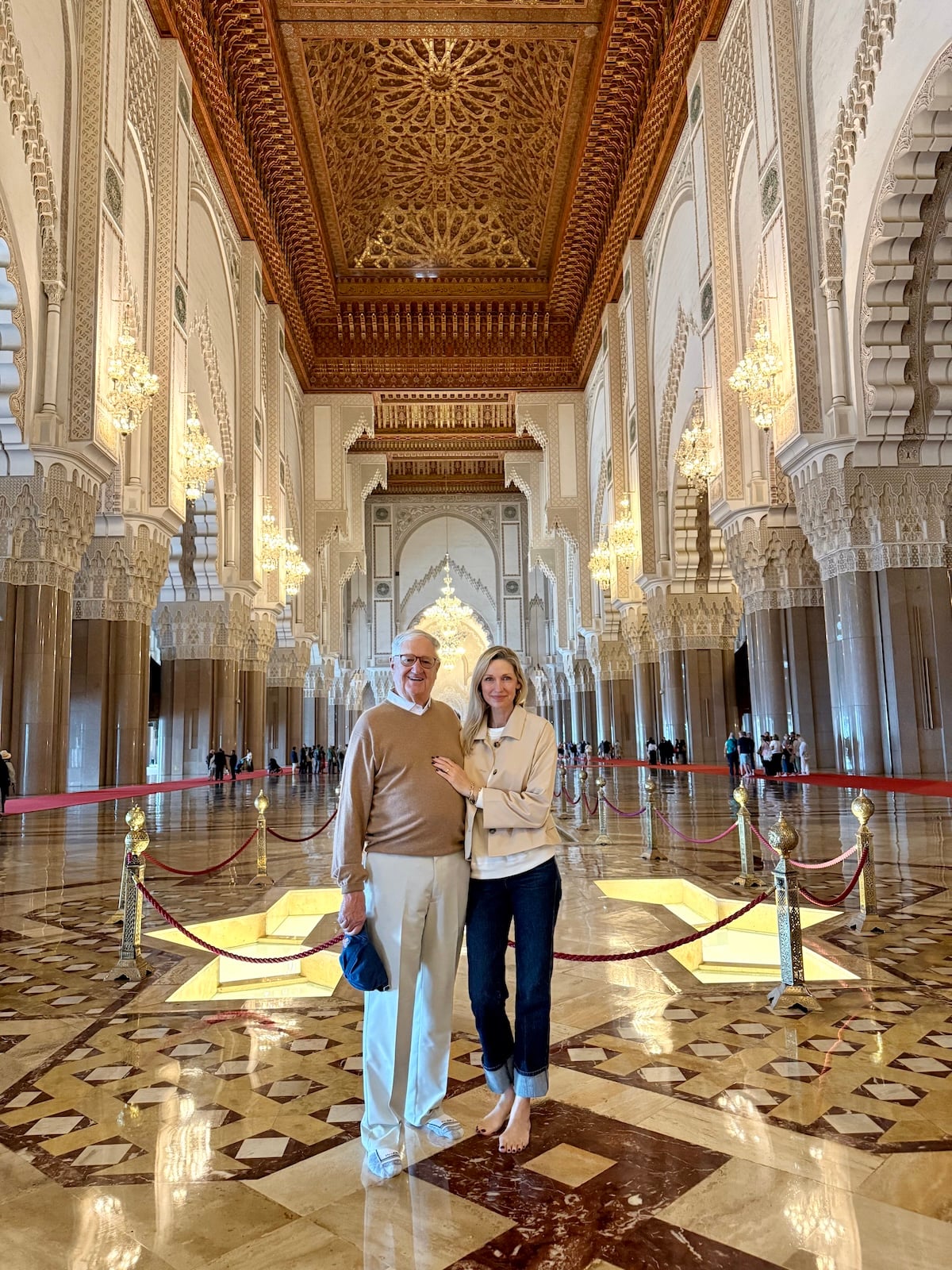
One of the most breathtaking experiences was visiting the Hassan II Mosque, dramatically perched over the Atlantic Ocean. Completed in 1993, it’s one of the largest mosques in the world, and it’s almost impossible to fully comprehend its scale until you’re standing inside it. The carved marble, mosaics, cedar ceilings, and ocean views make it feel both grand and deeply peaceful. As you walk in, you’re handed a bag for your shoes — wear socks.
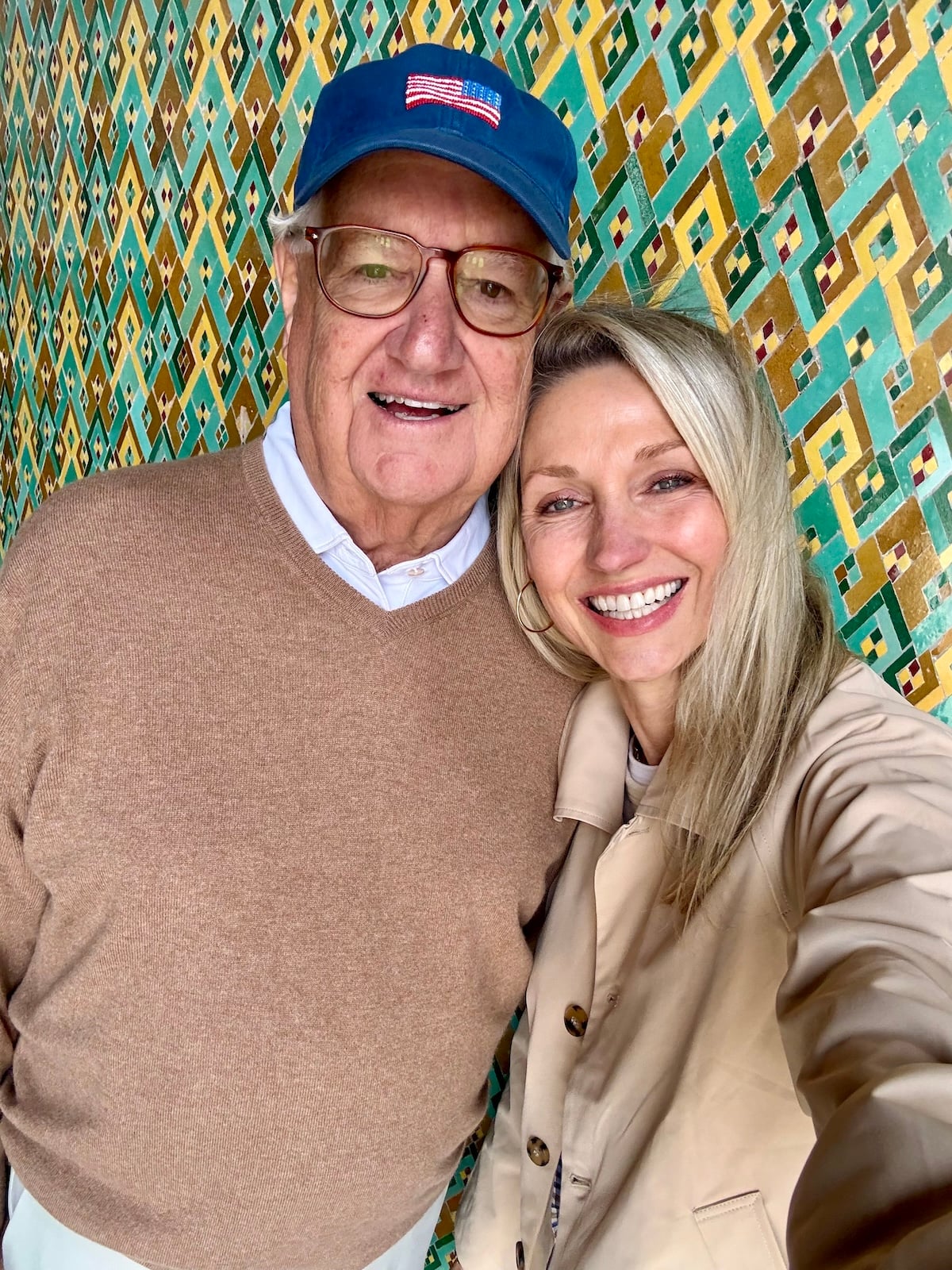
We spent the afternoon wandering through the Habous Quarter, one of my favorite areas in Casablanca. The streets are lined with shops selling argan oils, traditional beauty products, handcrafted items, spices, and artisan goods.
Make sure to stop into Argamia to browse the herbs, oils, and potions — we stocked up on skin and hair products that felt like pure luxury after a long travel day.
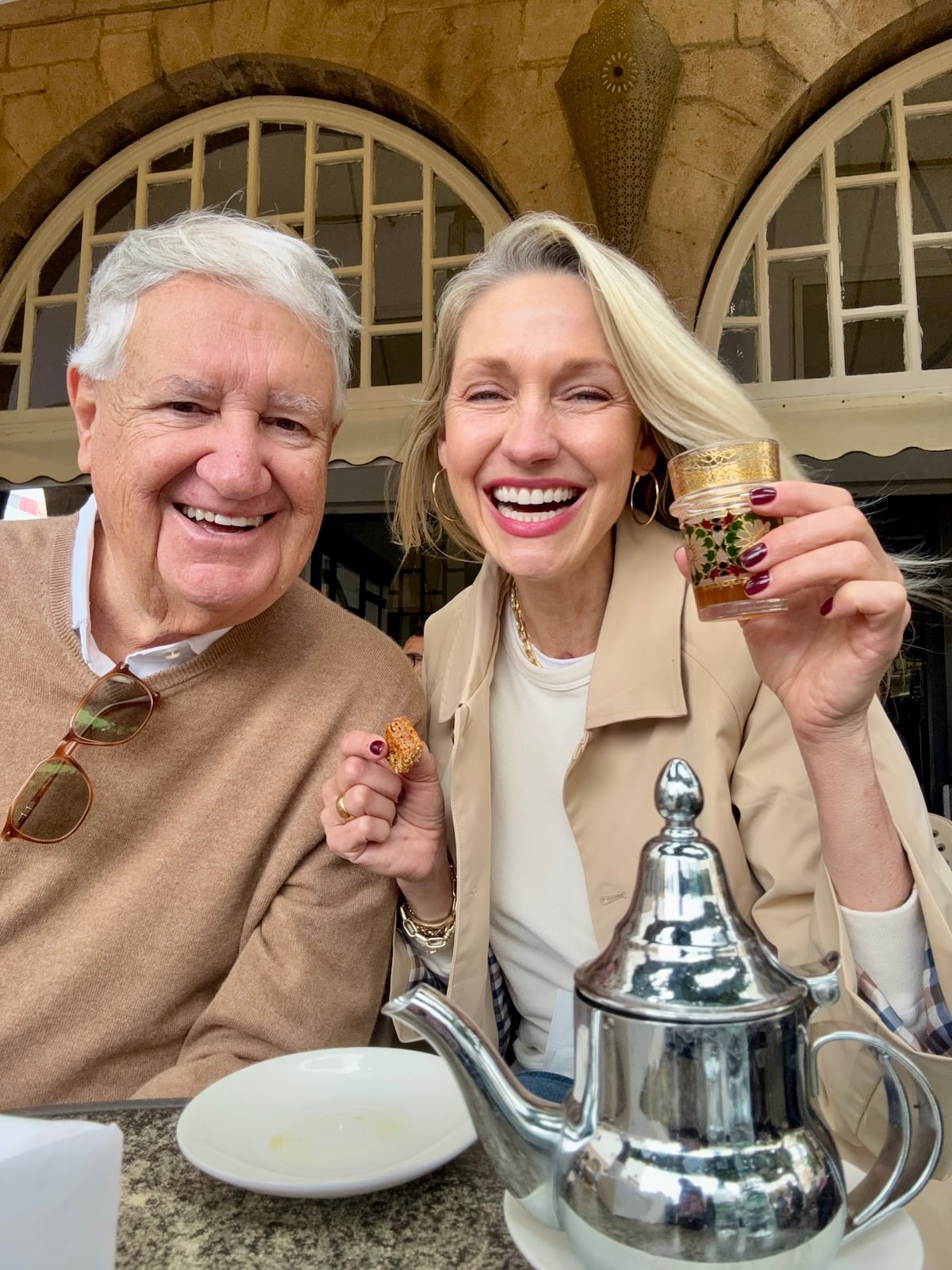
No visit is complete without Bennis Habous, an iconic pastry shop with trays upon trays of delicate almond pastries, honey-soaked sweets, and buttery cookies dusted in powdered sugar. We took a box of treats across the street to a café and had our first Moroccan mint tea of the trip, watching passersby while our server poured the tea three times from high in the air. A ritual I immediately loved.
The bazaars nearby were incredible for rugs and textiles, and Souk Ben Rkha (Souk Morgan) offered a more local, bustling market experience that felt wonderfully authentic. If you’re a Casablanca film fan, pop into Rick’s Café — if you know, you know.
One of the highlights of Casablanca was spending time with our guide, Ayoub Benlghazi, who was warm, knowledgeable, and navigated us around the city with ease. Having a local guide in each city genuinely made the trip.
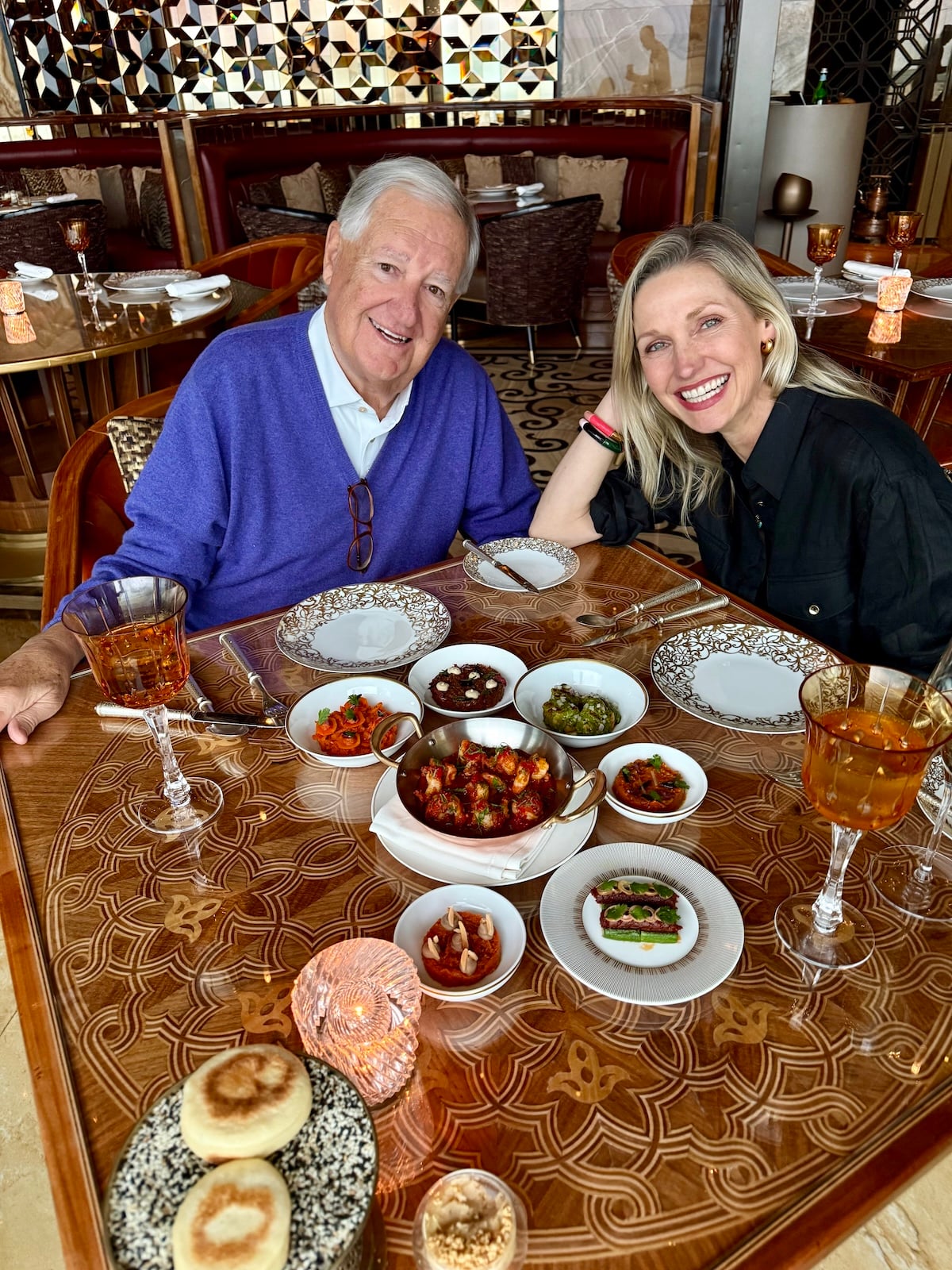
Where We Ate in Casablanca
- La Grande Table Marocaine – rooftop views and exceptional Moroccan cuisine
- Ocean View Cabestan – Mediterranean
- Sqala – international
- Dar Dada – Moroccan
- Le Basman – Moroccan
- Lily’s – Asian
Rabat: Gardens, Marble & Ancient History
From Casablanca, we drove to Rabat, Morocco’s elegant capital city.
Lunch at Villa Mandarine felt like stepping into a secret garden. The lush greenery, citrus trees, flowers, and serene atmosphere made it one of the most peaceful meals of the trip. It’s also a boutique hotel, and honestly, I could have happily stayed there for days.
We explored the stunning Mausoleum of Mohammed V, known for its extraordinary carved marble and intricate craftsmanship. Nearby stood the iconic mosque with its green-tiled roof, another reminder of how beautifully Morocco preserves its architectural heritage. Two guards on horseback outside made the experience feel even more regal.
The Roman ruins around Rabat were another reminder of Morocco’s incredibly layered history, something you feel constantly throughout the entire country.
Fez: Morocco’s Cultural Soul
If Casablanca feels polished and cosmopolitan, Fez feels ancient, immersive, and deeply spiritual.
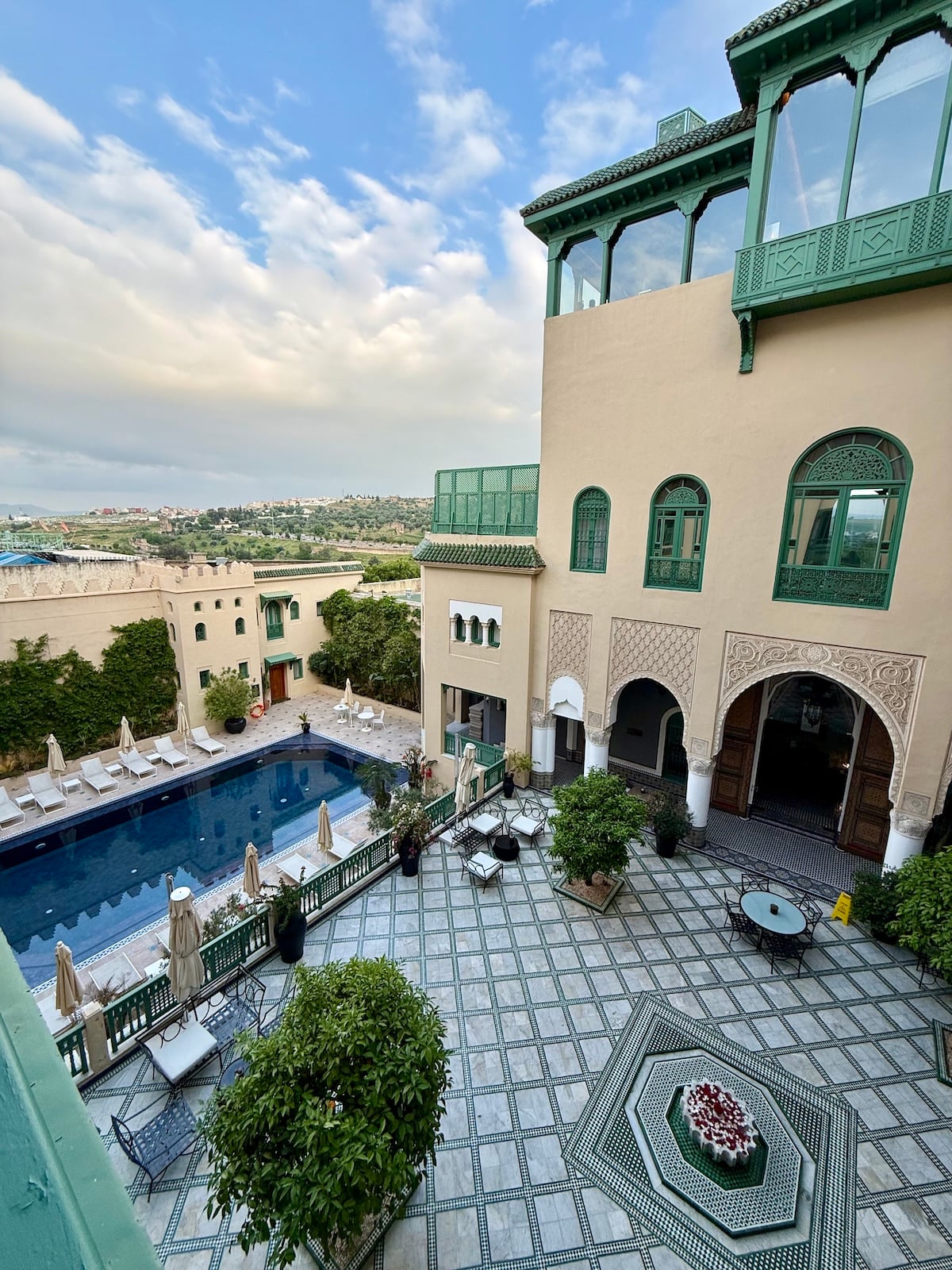
We stayed at the gorgeous Palais Faraj Suites & Spa, overlooking the sprawling medina below. Fez is home to the world’s largest pedestrian medina, a UNESCO World Heritage Site where more than 250,000 people still live and work within its maze-like walls. The entire city is vibrant and totally alive with an old-world, authentic energy.
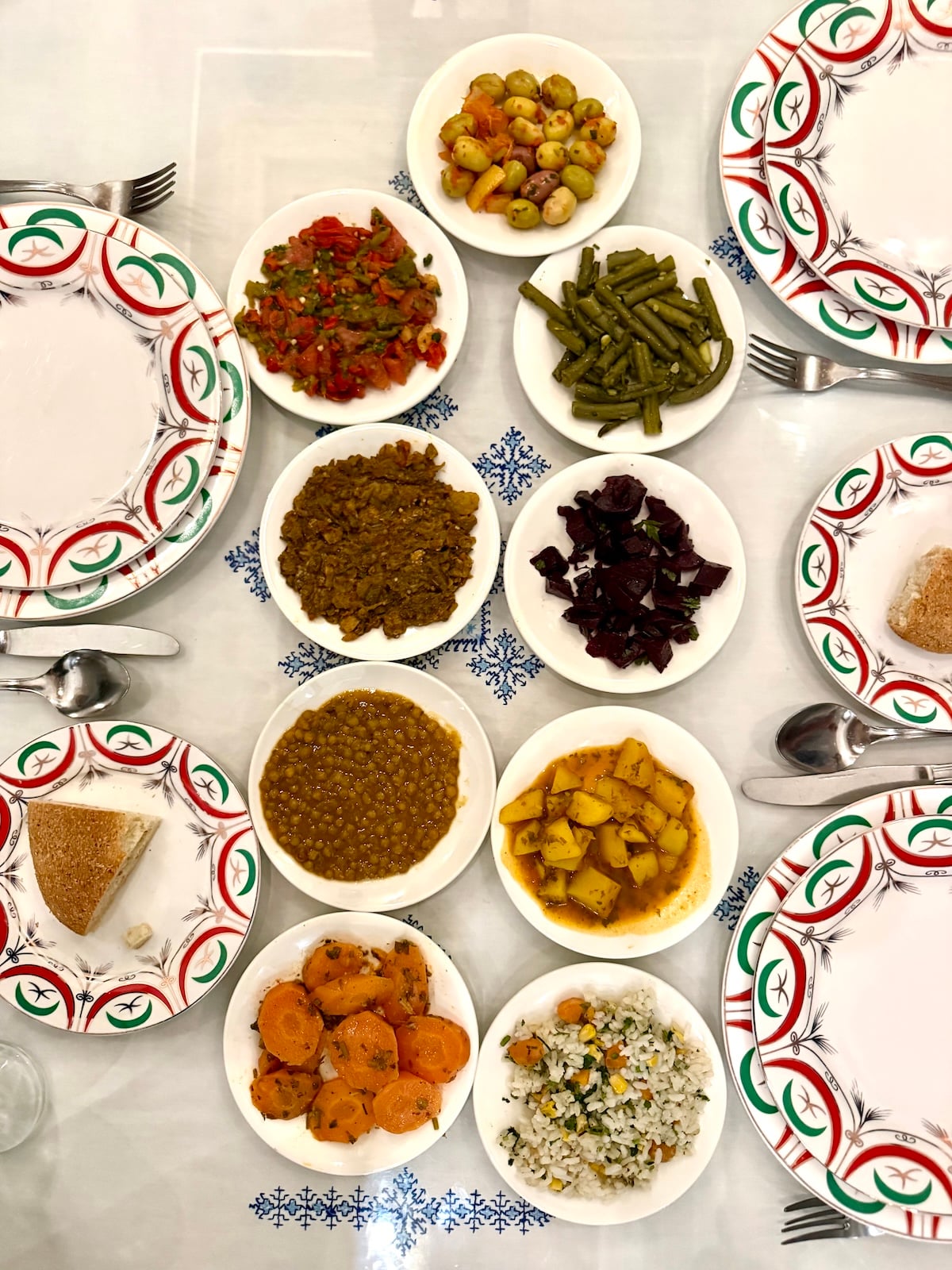
Walking through Fez is unlike anywhere else I’ve ever been. More than 9,000 narrow lanes, alleyways, souks, and food stalls — local bread makers, butchers, barrels of olives as we twisted through the city. Every turn revealed something new: spices piled high, steaming tajines, artisans hammering metal by hand, donkeys weaving through crowds, and centuries-old traditions still thriving. When I tell you we ate our weight in dates and olives on this trip, I mean it. Those slow-cooked tajine flavors made me want to make my Vegetarian Tagine the moment I got home, along with my Moroccan Chicken and these Caramelized Carrots with Chermoula that taste like they belong in a Fez souk.
The city’s Jewish history was one of the most fascinating parts of our visit. Morocco had a large Jewish population dating back to the 1st century AD, later becoming primarily Sephardic Jewish communities. The mellah, or Jewish quarter, operated separately under rabbinical governance and Jewish law. Following the creation of Israel in 1948, much of Morocco’s Jewish population emigrated — many eventually settling in Paris, Marseille, Quebec, and New York. Yet Jewish heritage remains deeply woven into Moroccan culture, and throughout the country you still find synagogues and evidence of this longstanding coexistence. One particularly moving detail: Torah scrolls were traditionally written on deer skin parchment.
We visited Karaouine University, built in AD 859 and considered the oldest continually operating university in the world.
From Nejjarine Square to the Royal Palace in Fez el-Jadid, the Islamic madrasas, and the mellah, every part of the city felt alive with history.
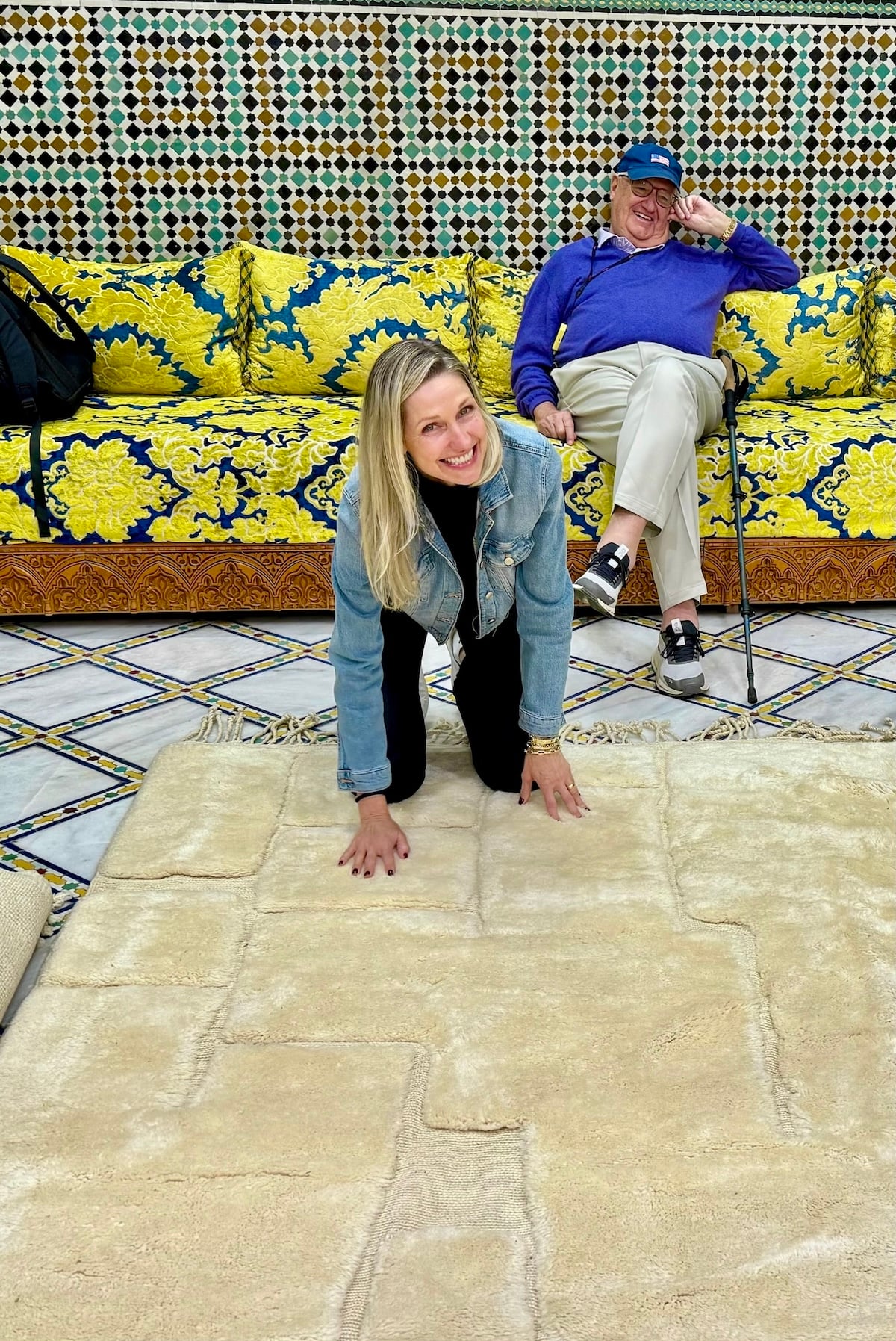
One of my favorite stops was a traditional rug and weaving studio, Palais Quaraouiyine, where artisans create entirely handmade Berber rugs using sheep’s wool and natural vegetable dyes. Watching the craftsmen work by hand made me appreciate every textile we saw throughout Morocco even more. If you’re looking to purchase a rug and view different weaves and styles from around the country with no pressure to buy, this is the place.
Where We Ate in Fez
- Ryad Nejjarine – beautiful setting, Moroccan cuisine, vaulted ceilings and intricate tile work throughout
- Dar Anebar – incredible traditional tajines layered with warming spices and slow-cooked flavors (we ate here both nights)
- La Maison Blanche – international
- Karawan Riad – Moroccan and international
- Ishq – Moroccan and international
- Le Jardin des Biehn – Moroccan and international
The Tanneries of Fez
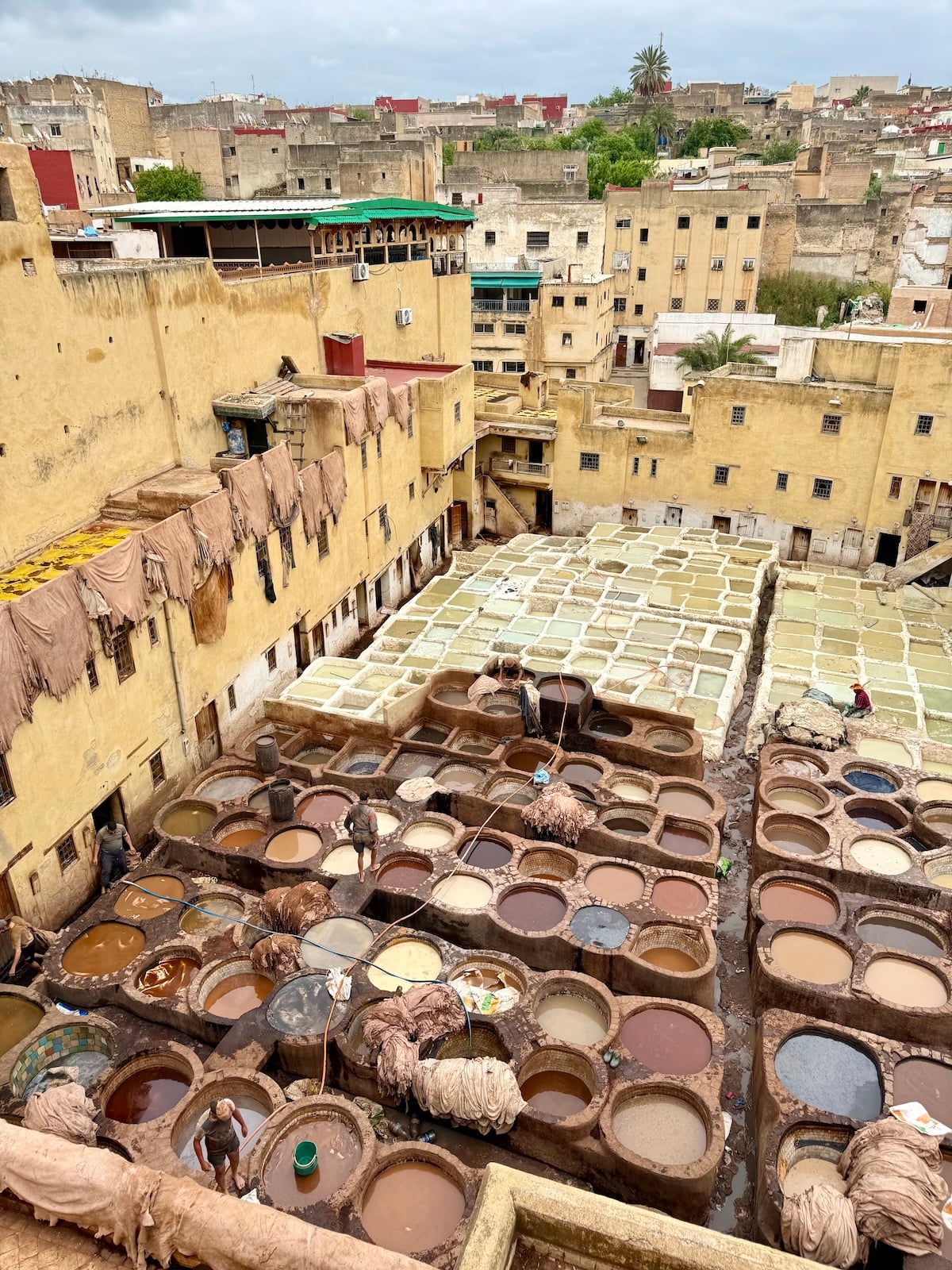
The tannery experience is intense, fascinating, and completely unforgettable. From the moment you walk in, you’re handed a large bunch of fresh mint to hold under your nose. You’ll understand why immediately.
Leather is still produced entirely by hand using methods that haven’t changed in centuries. No chemicals. No machinery. Just natural ingredients: pigeon droppings for ammonia, henna, indigo, cedar wood, poppy flowers, and coal. The hides — sheep, goat, and especially lamb, which is the softest — are transformed over the course of nearly three weeks into beautifully supple leather goods. This is one of those places that completely transports you to another era.
Would you like to save this?
Volubilis & Wine Country
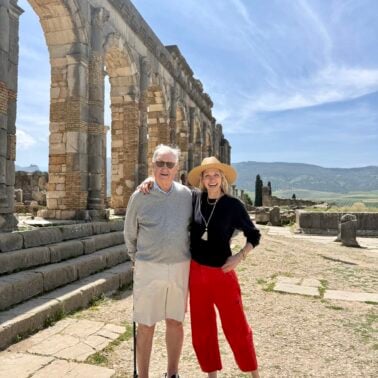
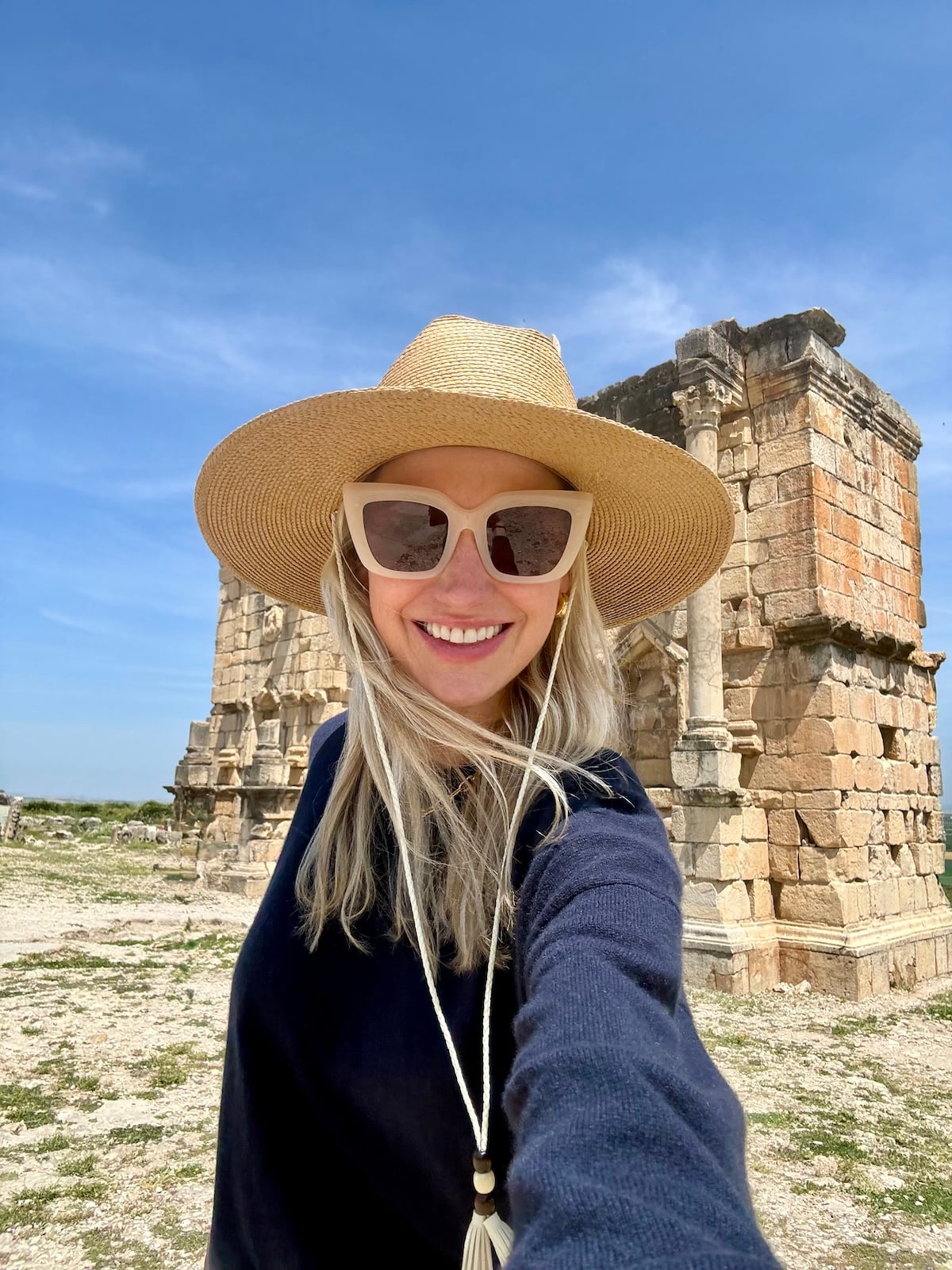
The next morning we visited Volubilis, one of the best-preserved Roman archaeological sites in North Africa and a UNESCO World Heritage Site. Triumphal arches, basilicas, columns, and especially the mosaics were extraordinary. Some of the mosaic floors remain remarkably intact, including depictions of Orpheus charming animals with his lyre. This was one of our favorite stops on the entire trip.
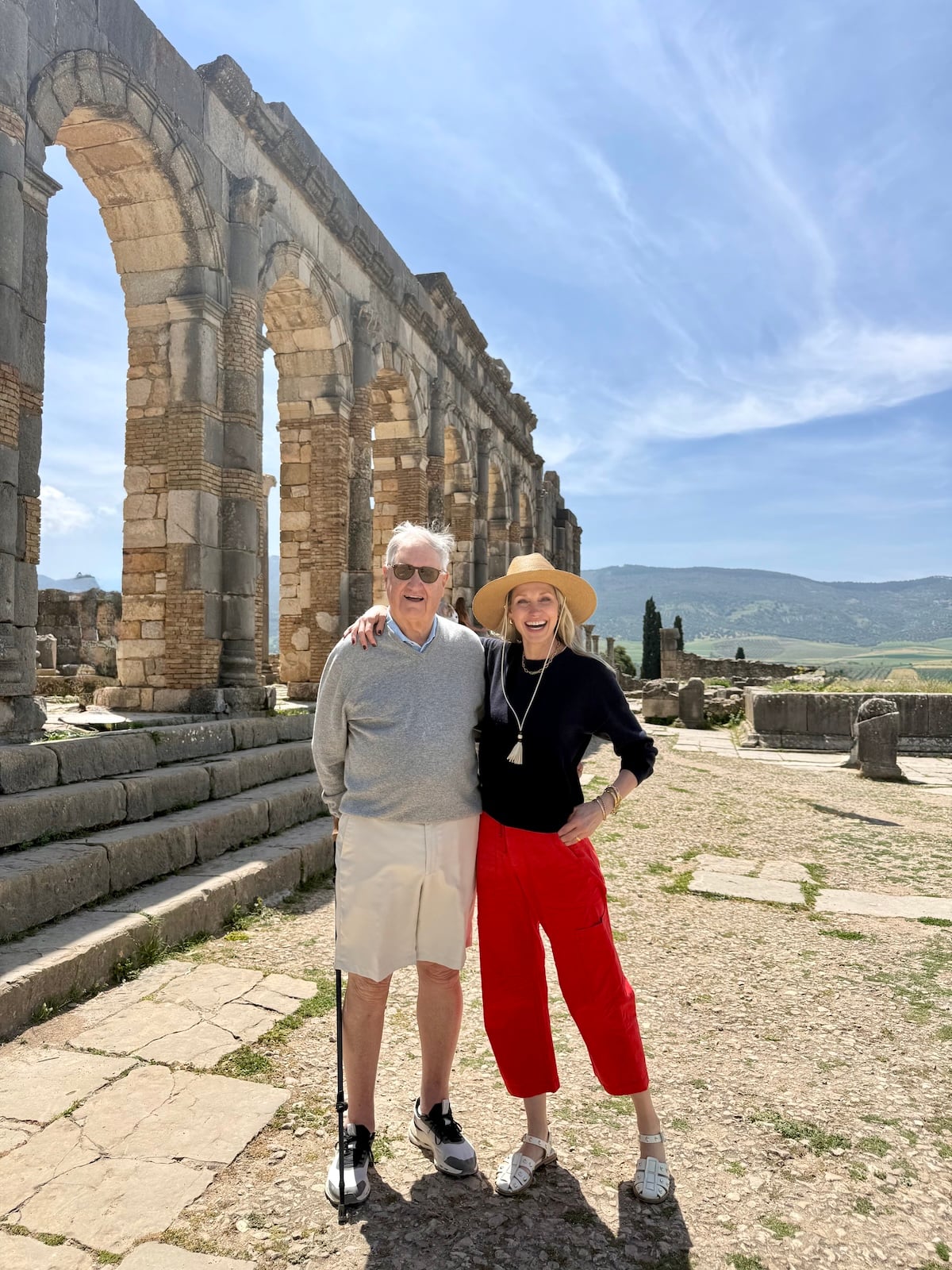
Afterward, we drove to Château Roslane outside Meknès for lunch, which felt like discovering another side of Morocco entirely. Surrounded by vineyards and olive groves, the winery was stunning, unexpectedly European in atmosphere while still feeling distinctly Moroccan. After walking through the fruit and vegetable garden, we had one of the most refined meals of the trip. If you’re bringing kids to Morocco, set a few hours aside here! It’s perfect for long walks and relaxing while the adults enjoy a glass of wine.
Into the Atlas Mountains & Sahara
The drive from Fez toward Erfoud was one of the most visually stunning parts of the trip. We passed through Berber villages, endless date palm plantations, dramatic mountain passes, and landscapes that at times looked almost Swiss. Seeing baboons in the trees along the mountain roads felt surreal.
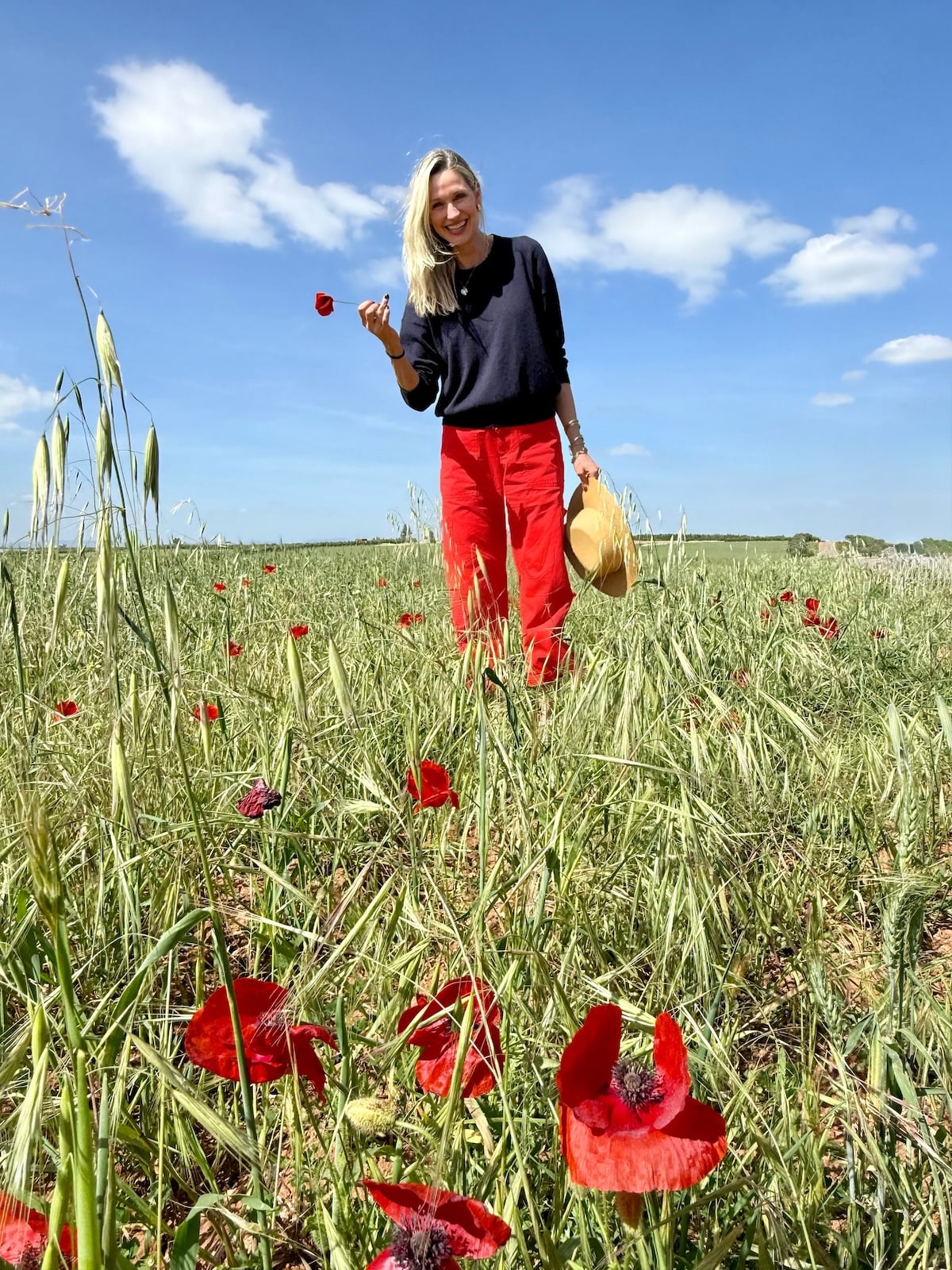
To prepare for our trip into the Sahara, we stayed at L’Hotel by Château de Sable. The buffet-style meals were some of the freshest and most seasonal of the entire trip, and you can spend hours reading or swimming in the gardens.
From there, we drove through the fortified desert town of Rissani, the last visible point of the Ziz river before the Sahara begins. Nearby, we visited fossil quarries where ancient fossilized fish have been discovered in the stone. I brought home a few treasures for my kids!
The Sahara Desert: Pure Magic
Nothing, absolutely nothing, compares to arriving in the Sahara Desert.
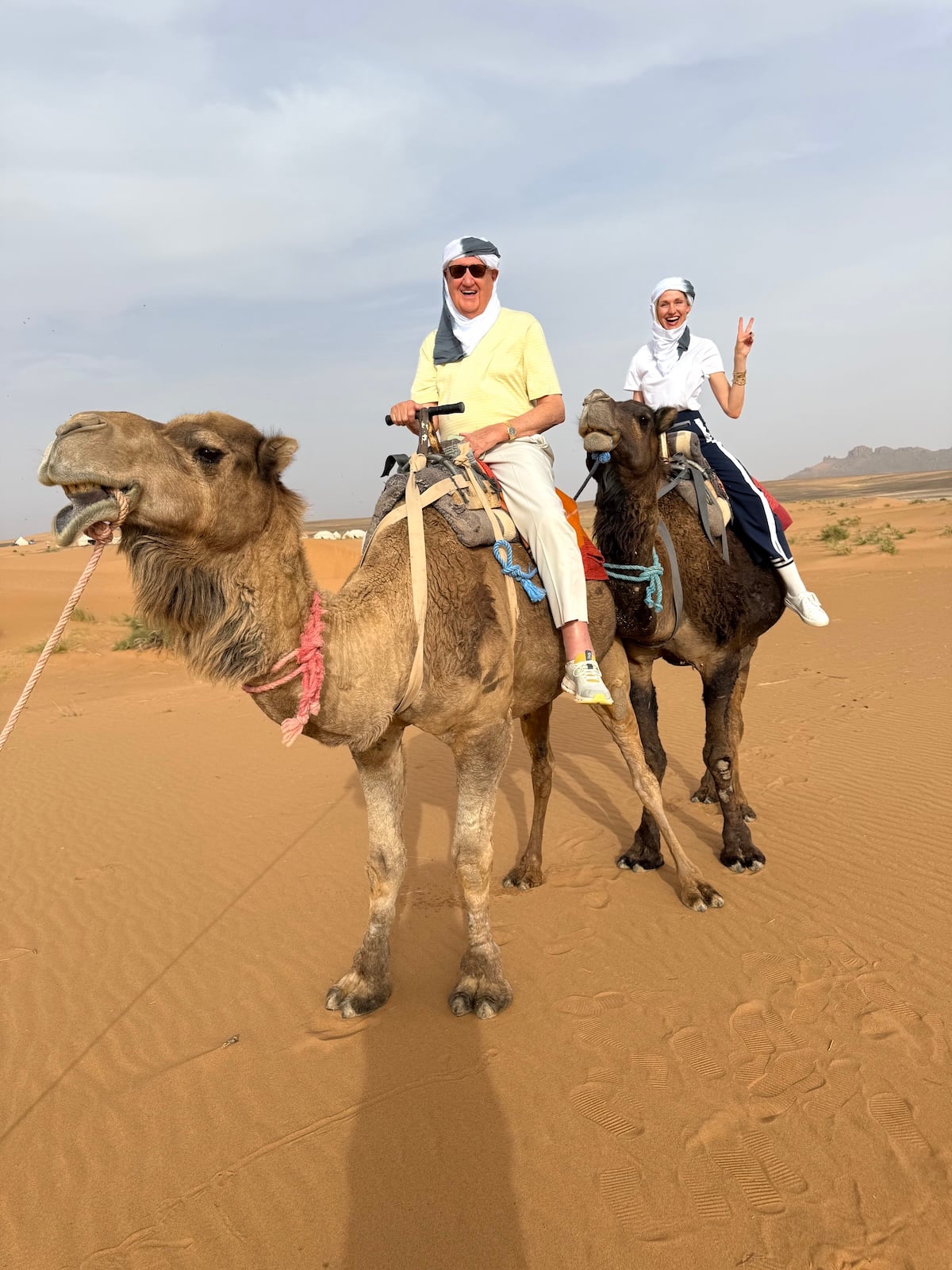
I wasn’t sure how my 82-year-old dad would handle a 24-hour desert experience. He was a complete champ and absolutely loved every second. We transferred from 4-wheel drive vehicles to camels and rode through towering golden dunes that reached nearly 500 feet high. The silence of the desert is unlike anything I’ve ever experienced.
At camp, we were welcomed with fresh mint tea and handmade pastries before gathering around a campfire for live local music, dancing, and traditional Moroccan instruments. We watched the sunset over the dunes, then had a traditional beef and vegetable tajine with couscous for dinner by the fire — the kind of meal that inspired recipes like my One Pot Spiced Chicken with Toasted Couscous.
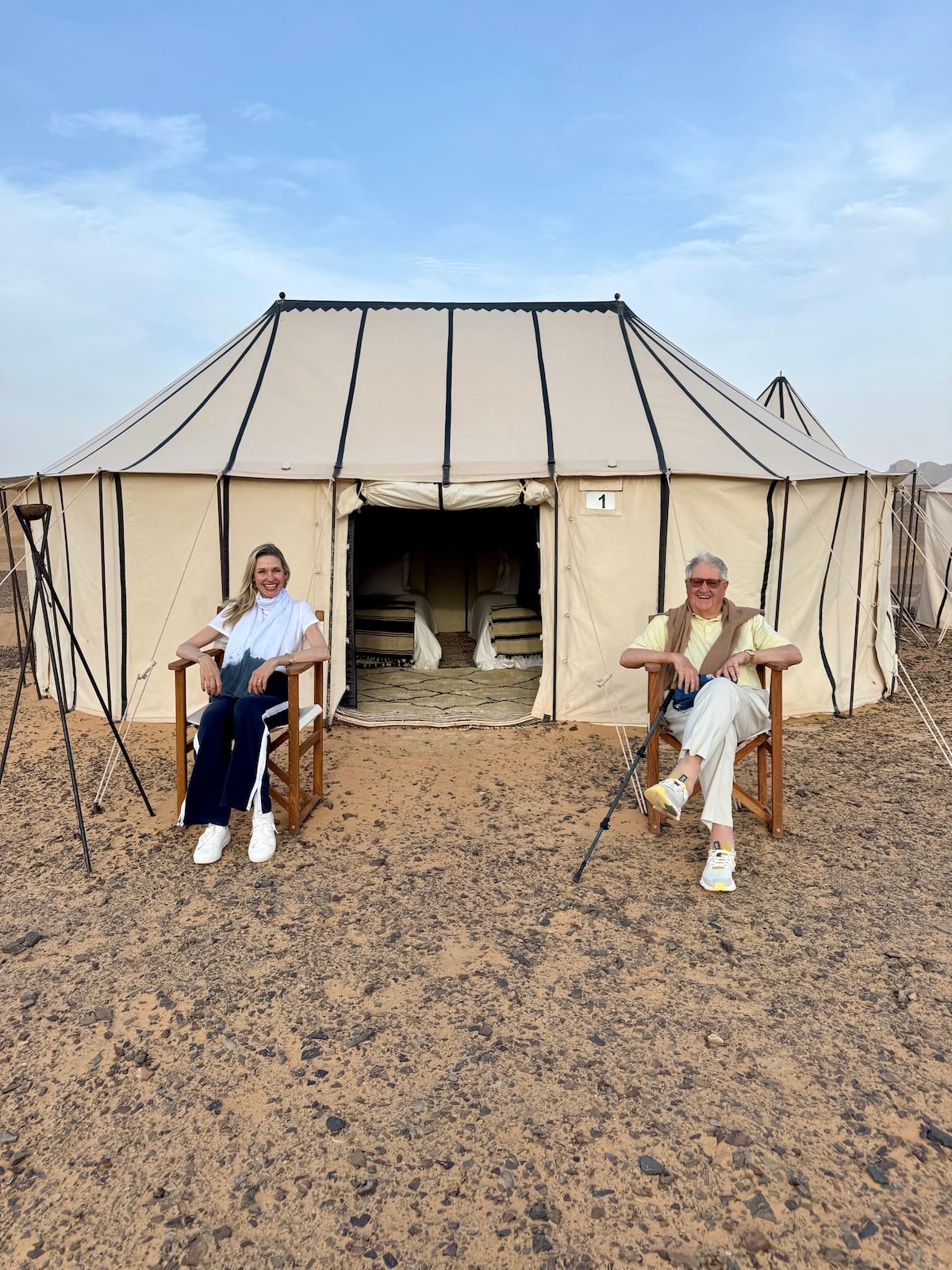
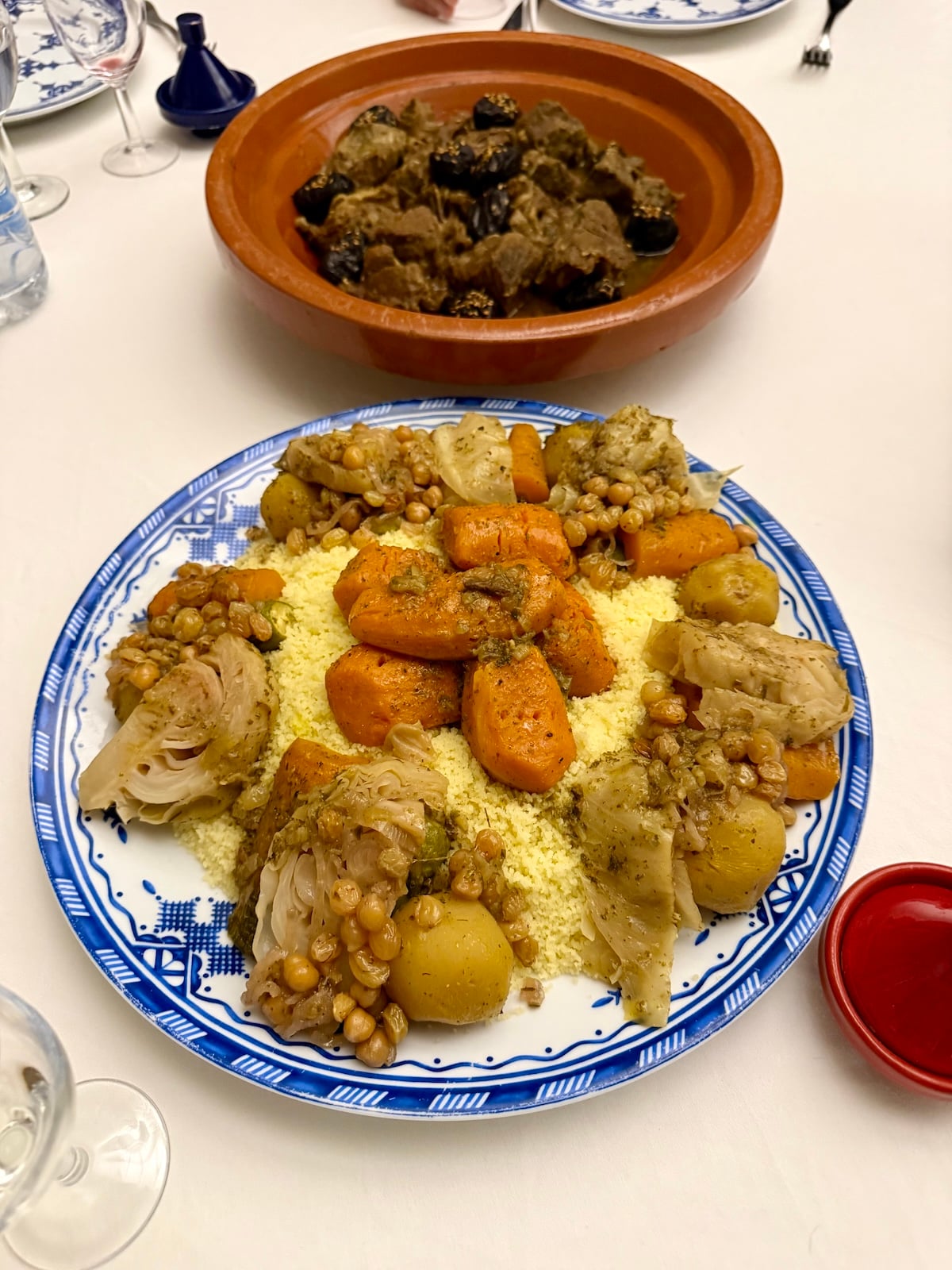
The next morning, we woke at 6 AM to watch the sunrise over the dunes while enjoying warm crêpes, freshly squeezed orange juice, homemade crumpets, fruit, and strong coffee. It was one of those travel moments you never forget.
Packing reminder: No electricity at the camp, so bring a portable charger. Though honestly, being unplugged made the experience even better.
Ouarzazate & Ancient Kasbahs
From the desert we traveled to Ouarzazate, often called the gateway to the Sahara and one of Morocco’s most cinematic regions. We stayed at the glamorous Berbère Palace, famous for hosting film crews over the years.
We visited Hiyakat Al Janoub, a cooperative filled with beautiful handcrafted blankets, pillows, tablecloths, and textiles made on-site. Nearby, we explored one of Morocco’s oldest adobe ksars, built in the 11th century along ancient caravan routes. The landscape has appeared in countless films and shows including Gladiator, Game of Thrones, and Jewel of the Nile. If you’re up for the adventure, set aside enough time to climb to the top.
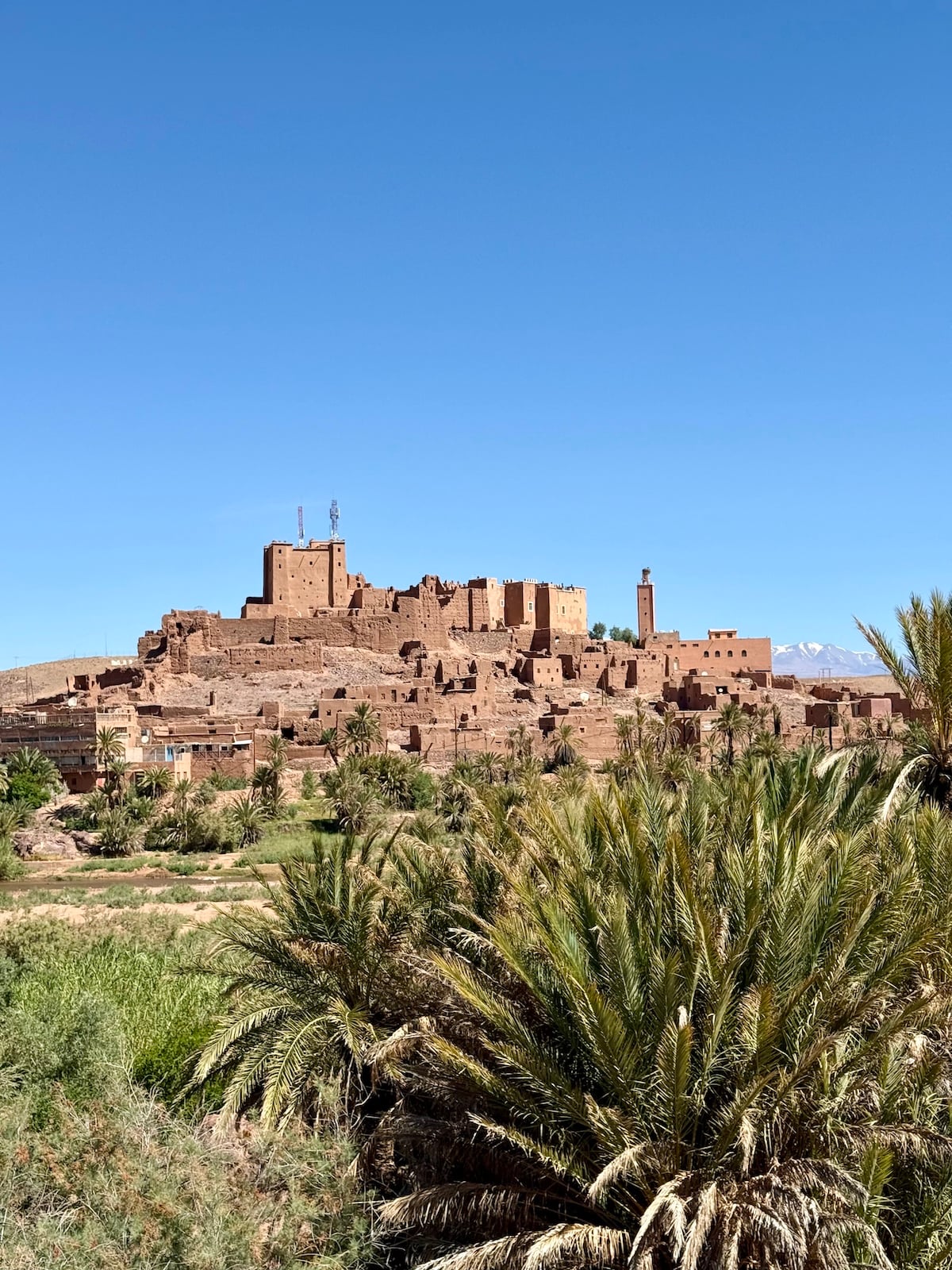
Lunch at Riad Ksar Ighnda Maison d’Hôtes was a rustic, beautiful pause before the winding five-to-six-hour drive through the Atlas Mountains to Marrakech.
Marrakech: The Red City
Marrakech is pure energy. Known as the Red City for its many red brick buildings, it’s Morocco’s tourism capital and a sensory overload in the best possible way. Motorbikes zip through tiny alleyways (it’s like New York City on steroids) while the sounds of music, snake charmers, food vendors, and orange juice sellers fill every street.
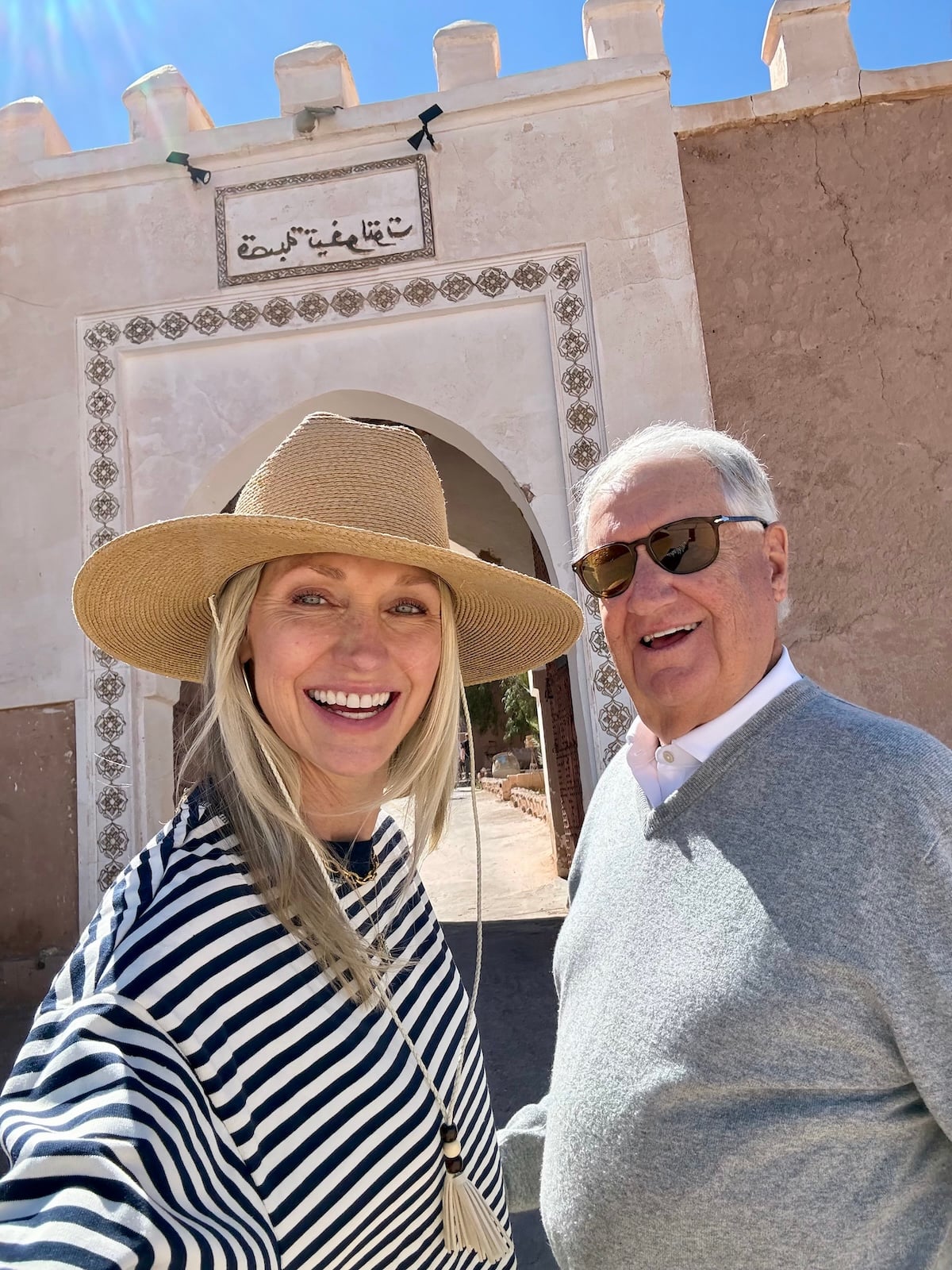
The heart of the city is Djemaa el-Fna, the famous central square that comes alive day and night with entertainers, musicians, food stalls, and nonstop activity.
With the expert guidance of our local guide, we explored Bahia Palace, wandered through spice and oil shops near Bab Agnaou, and spent hours in the medina and souks. Give yourself at least half a day to take it all in and be ready to barter.
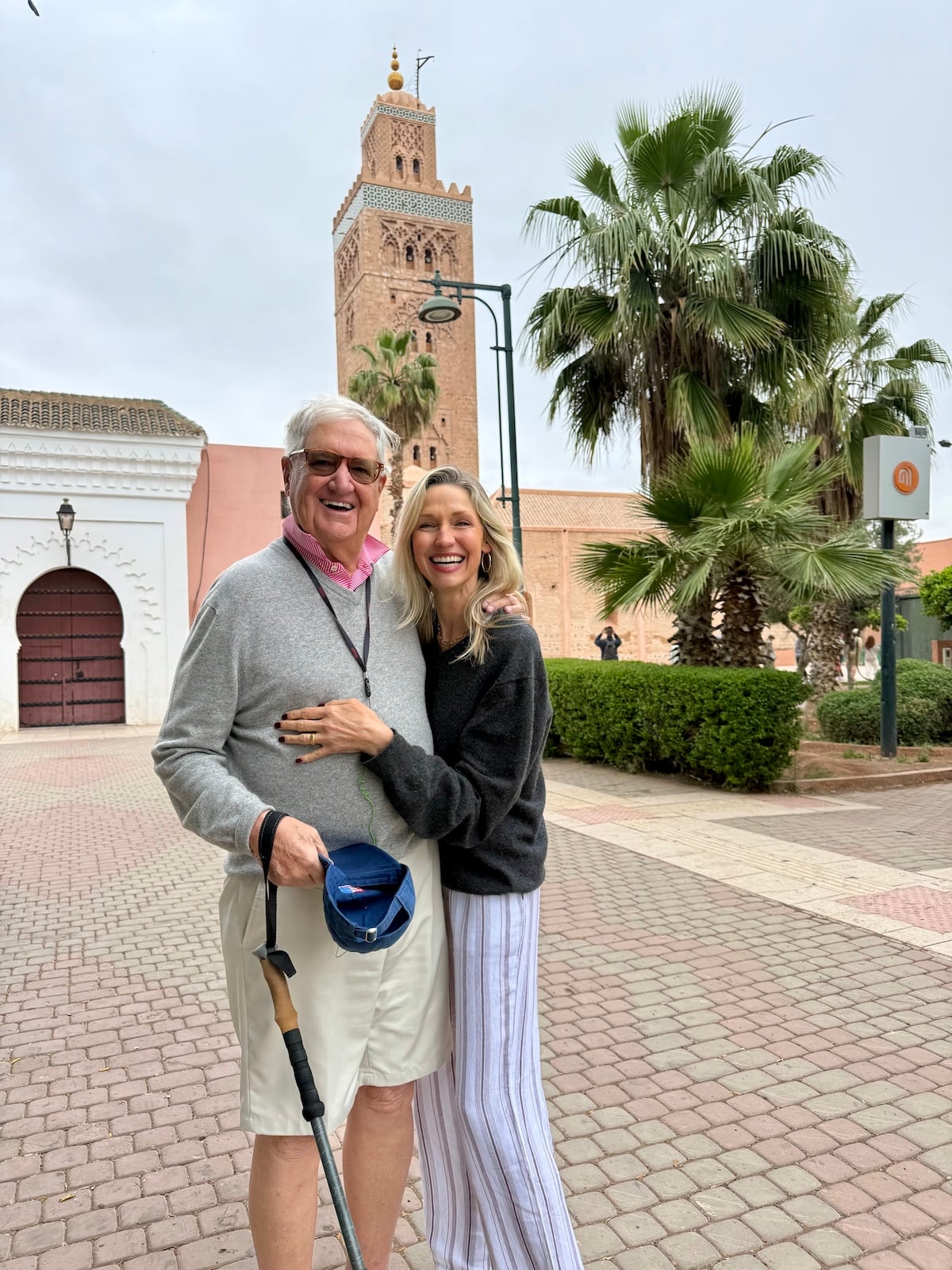
Lunch at Dar Ghizlane (also a small hotel) offered a peaceful escape from the city buzz. The bougainvillea, colored tiles, and fountains throughout are otherworldly.
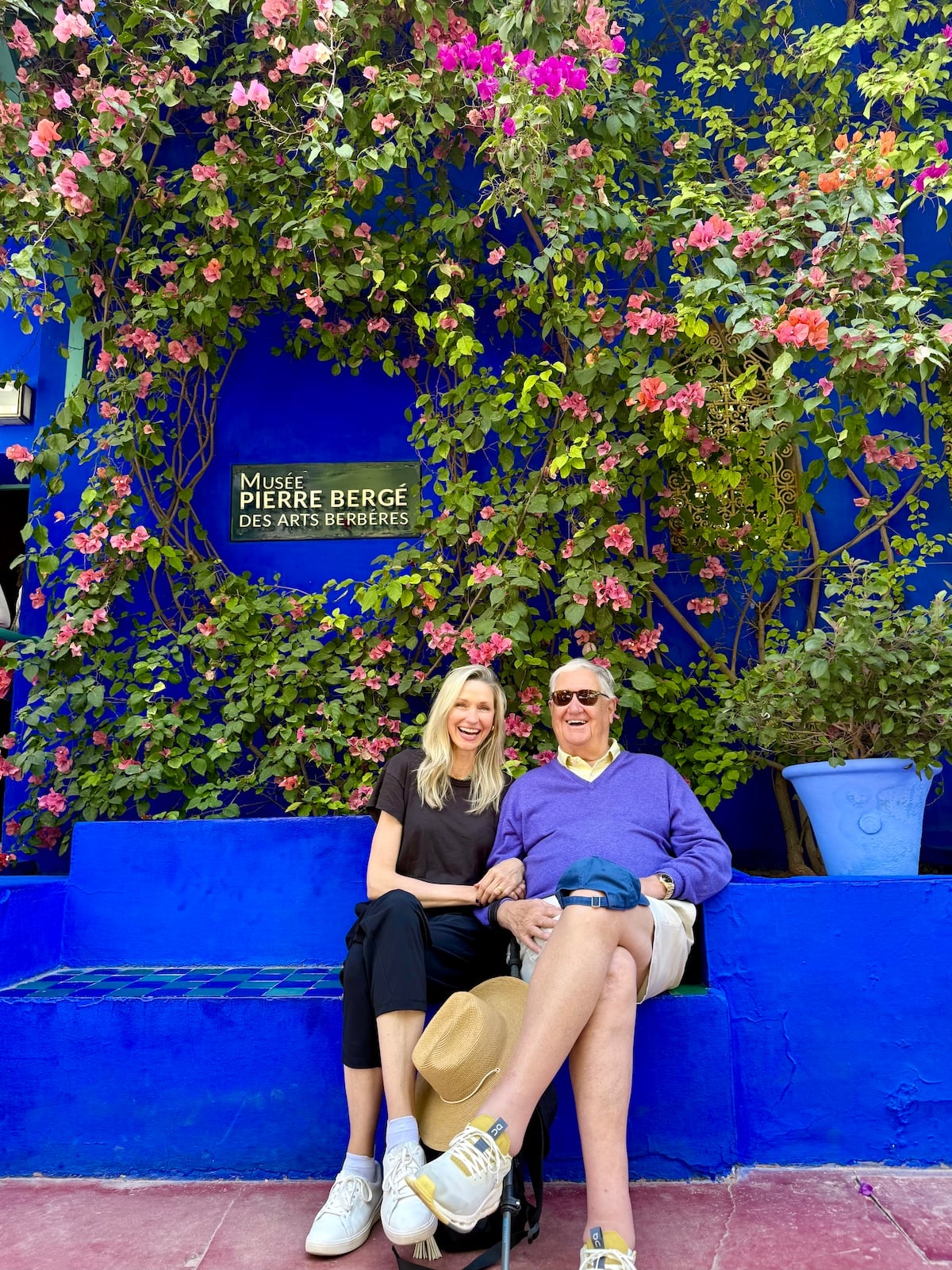
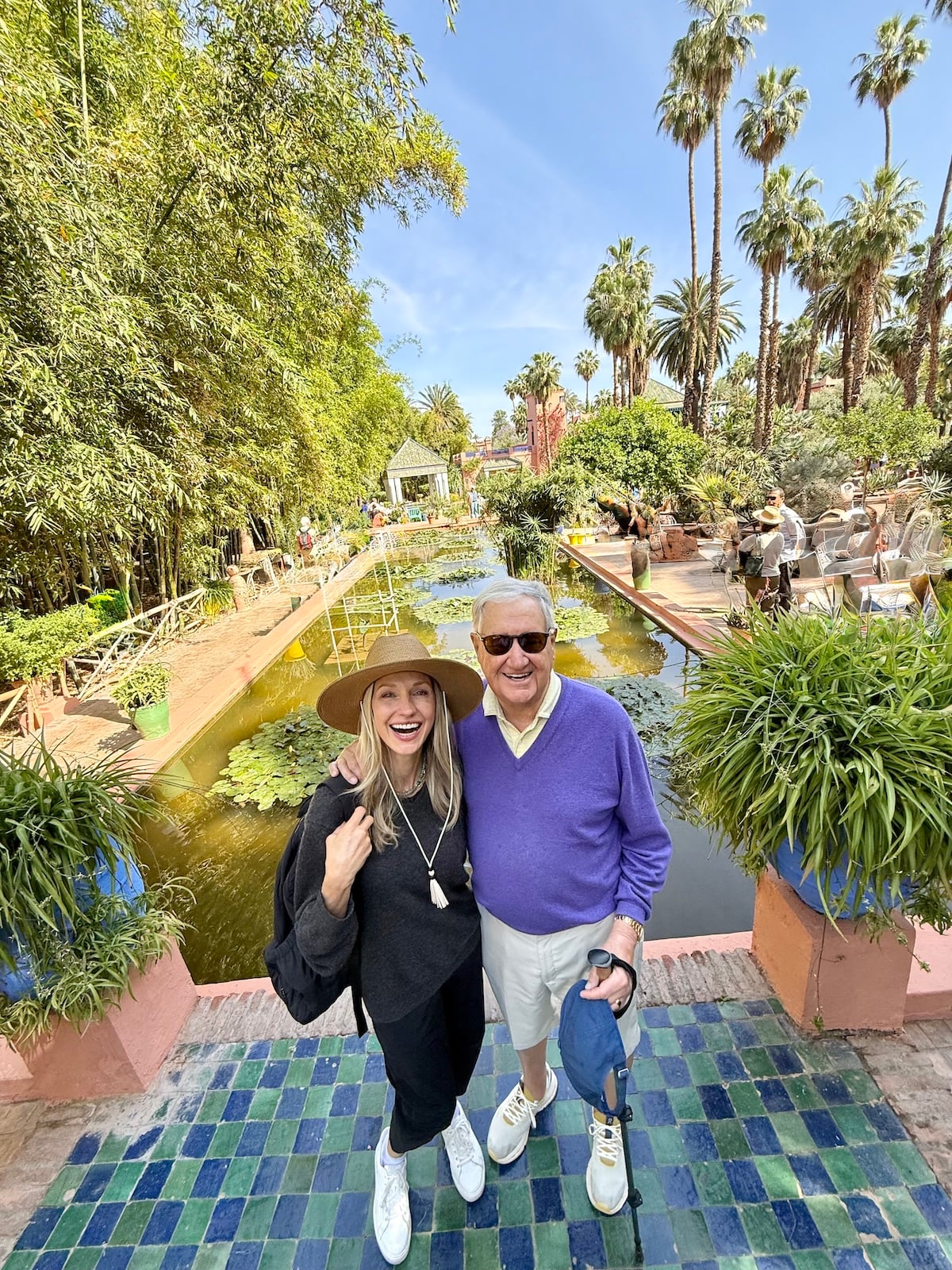
One of the most beautiful places in Marrakech was Jardin Majorelle, with its vibrant cobalt-blue buildings and lush gardens. Next door, the Yves Saint Laurent Museum, created by his partner Pierre Bergé, beautifully captures Saint Laurent’s deep connection to Morocco and the inspiration he drew from the country.
We stayed at the surprise highlight of our trip: Selman Marrakech. Olympic-sized swimming pool, a magnificent hammam and spa, rose and olive tree-lined paths, and endless charm. Hot tip: if you’re bringing young kids, they have one of the best kids clubs I’ve ever seen. My dad and I couldn’t pass up a Moroccan dinner of salads, pastillas, and tagine followed by belly dancers and an Arabian horse experience we will still be talking about for years.
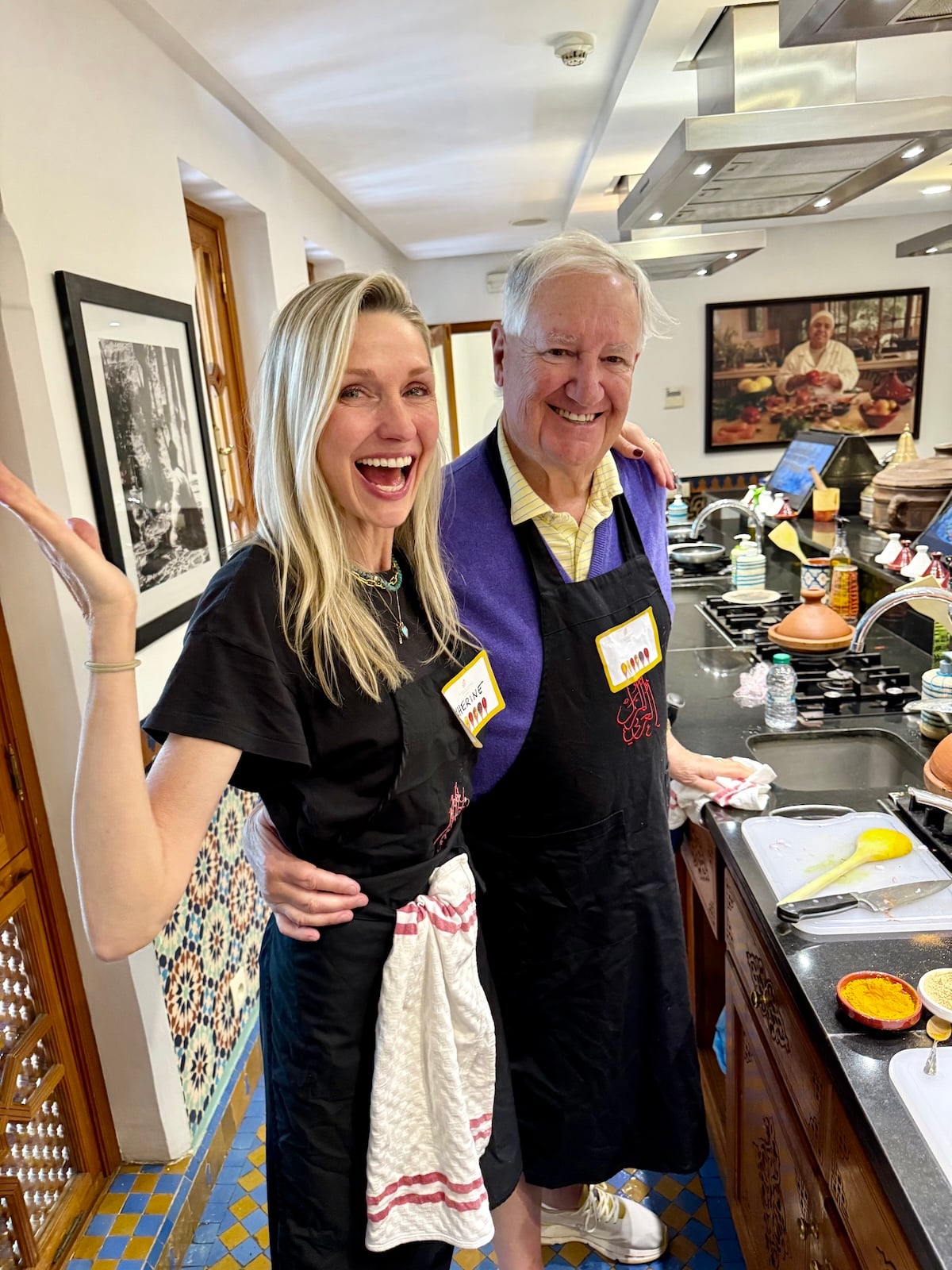
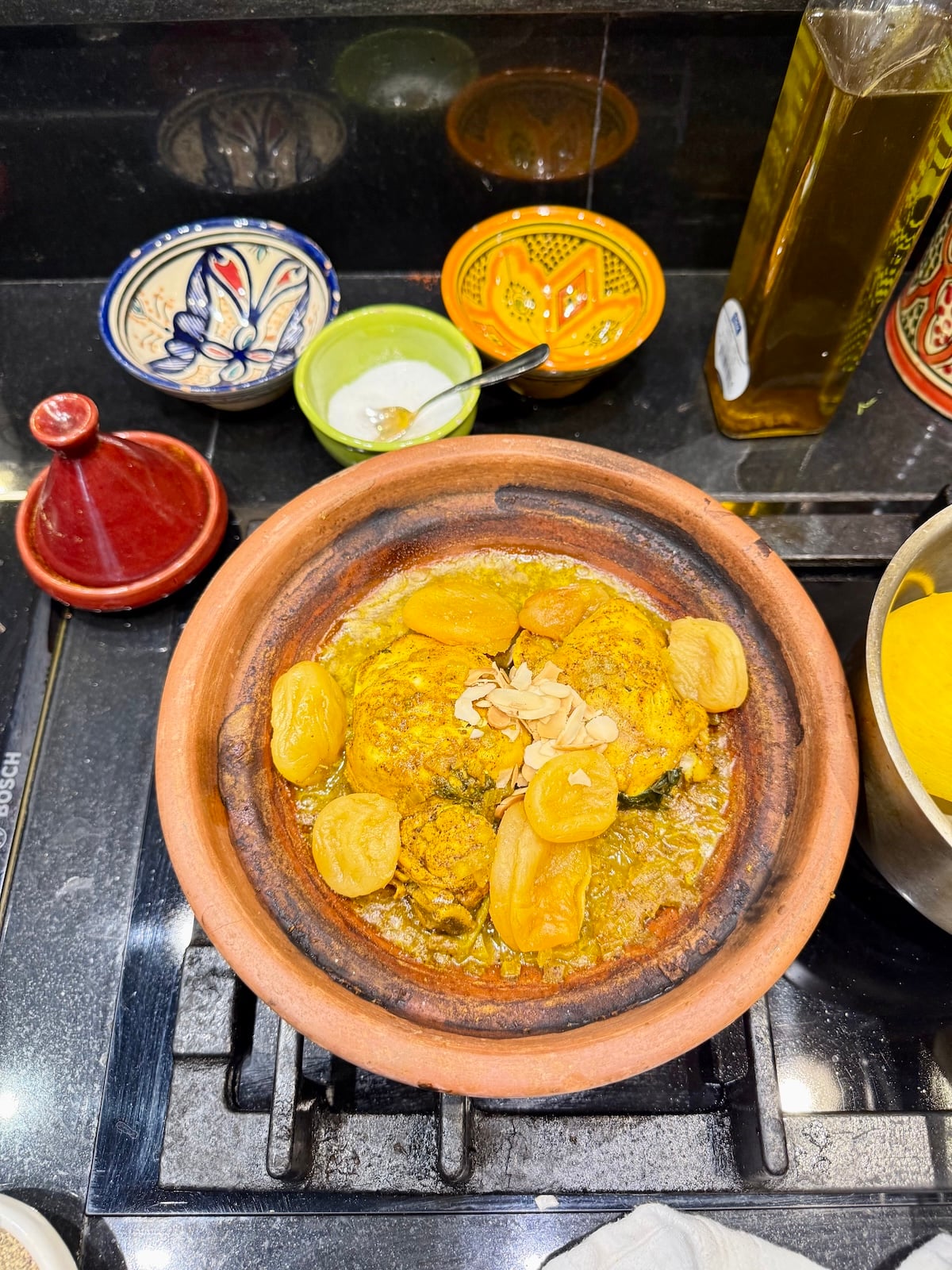
On our last day, we took a cooking class at La Maison Arabe Culinary School, where we learned to make chicken tajine with cinnamon and apricots: sweet, savory, fragrant, and absolutely delicious. Cooking and then eating a meal side by side with my dad was the perfect way to end the trip.
Where We Ate in Marrakech
- Sahbi Sahbi: incredible Moroccan cuisine, run entirely by women
- Dar Rhizlane: Moroccan gastronomic
- Dar Yacout: my go-to Moroccan restaurant from my modeling days, just as fabulous as ever
- La Mamounia: a landmark hotel with several restaurants (Moroccan, Asian, Italian, plus a wonderful lunch spot)
- Farmers: international and vegetarian
- La Terrasse des Épices: Moroccan
Shop My Morocco Looks
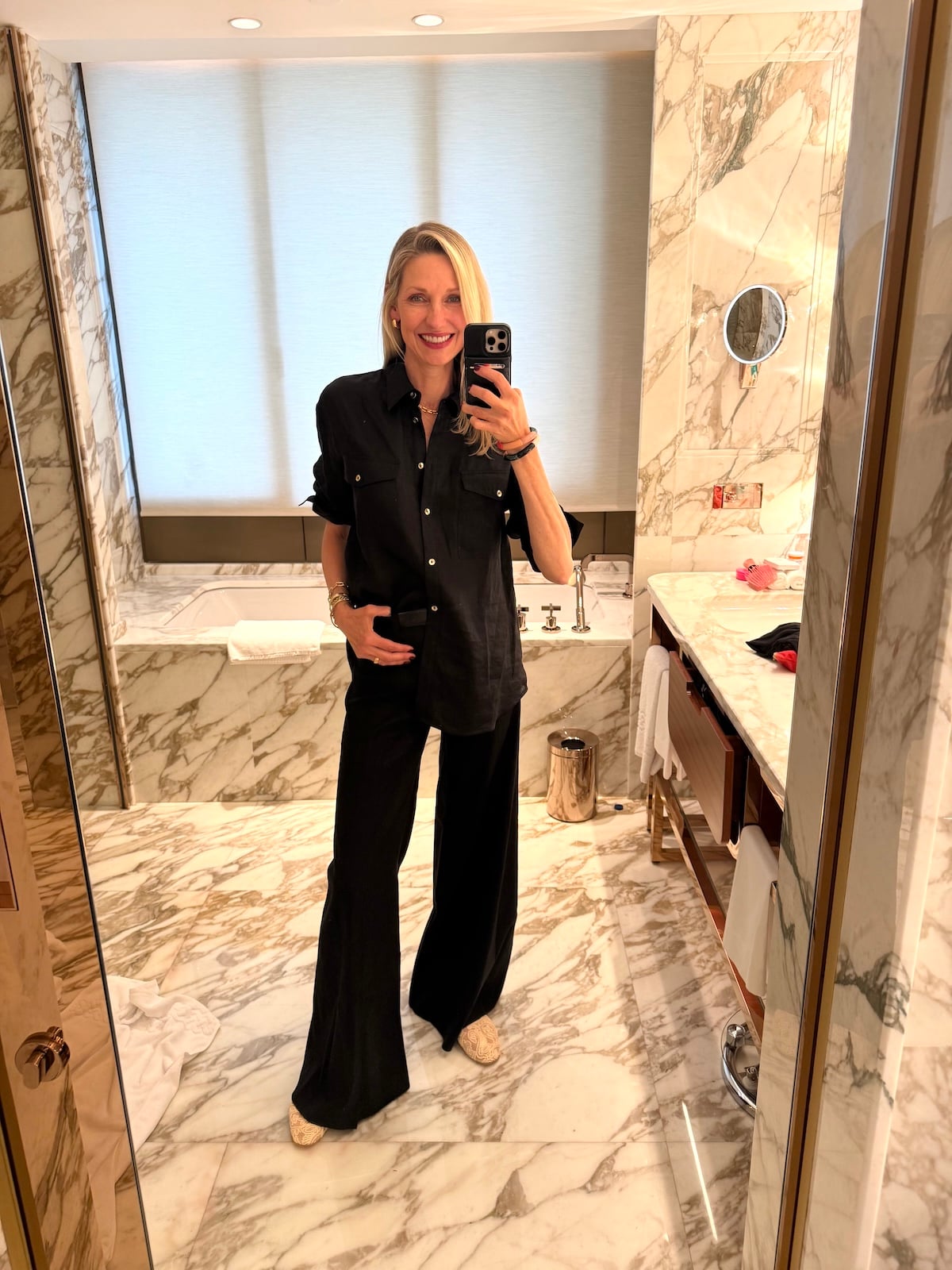
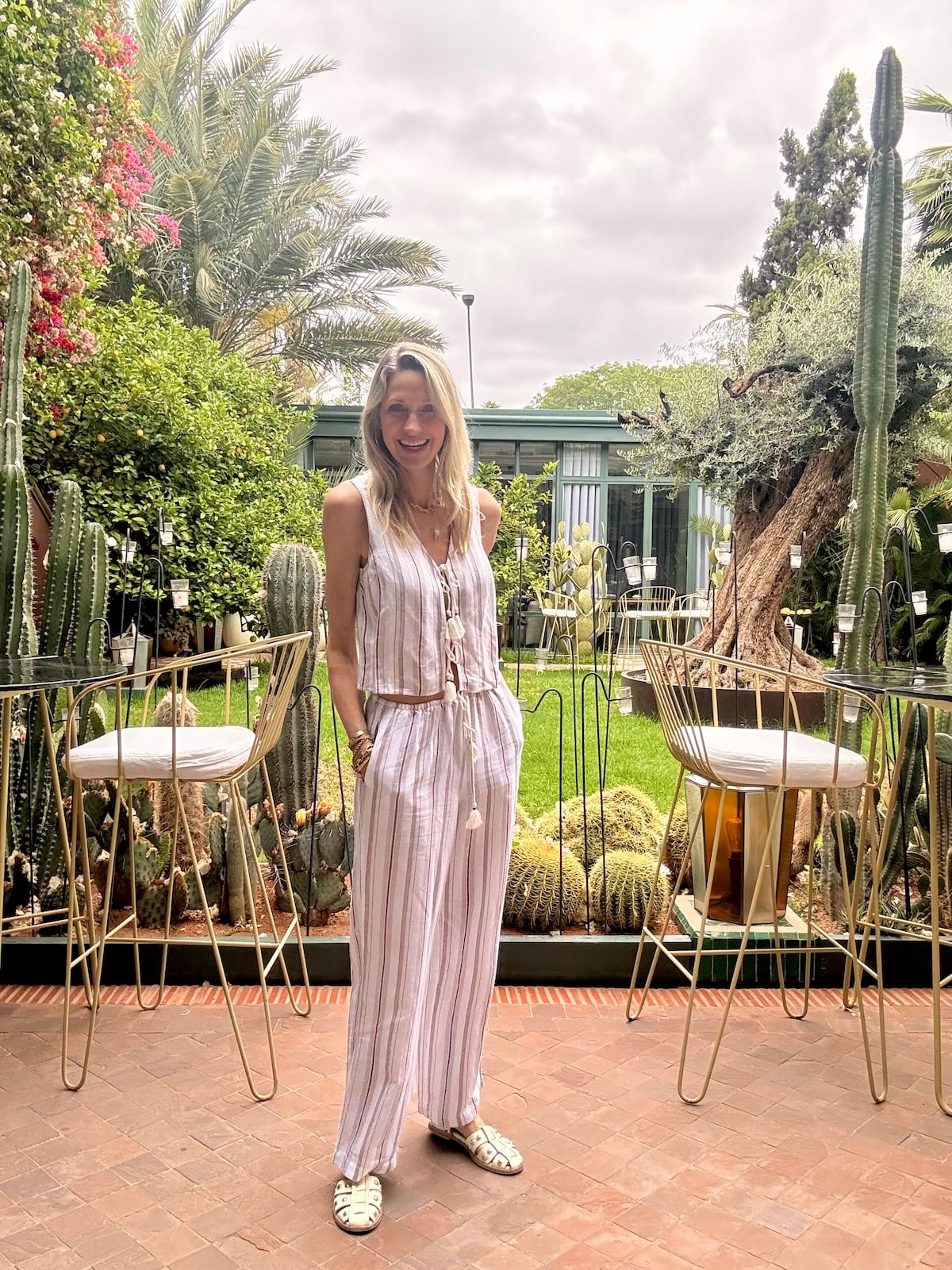
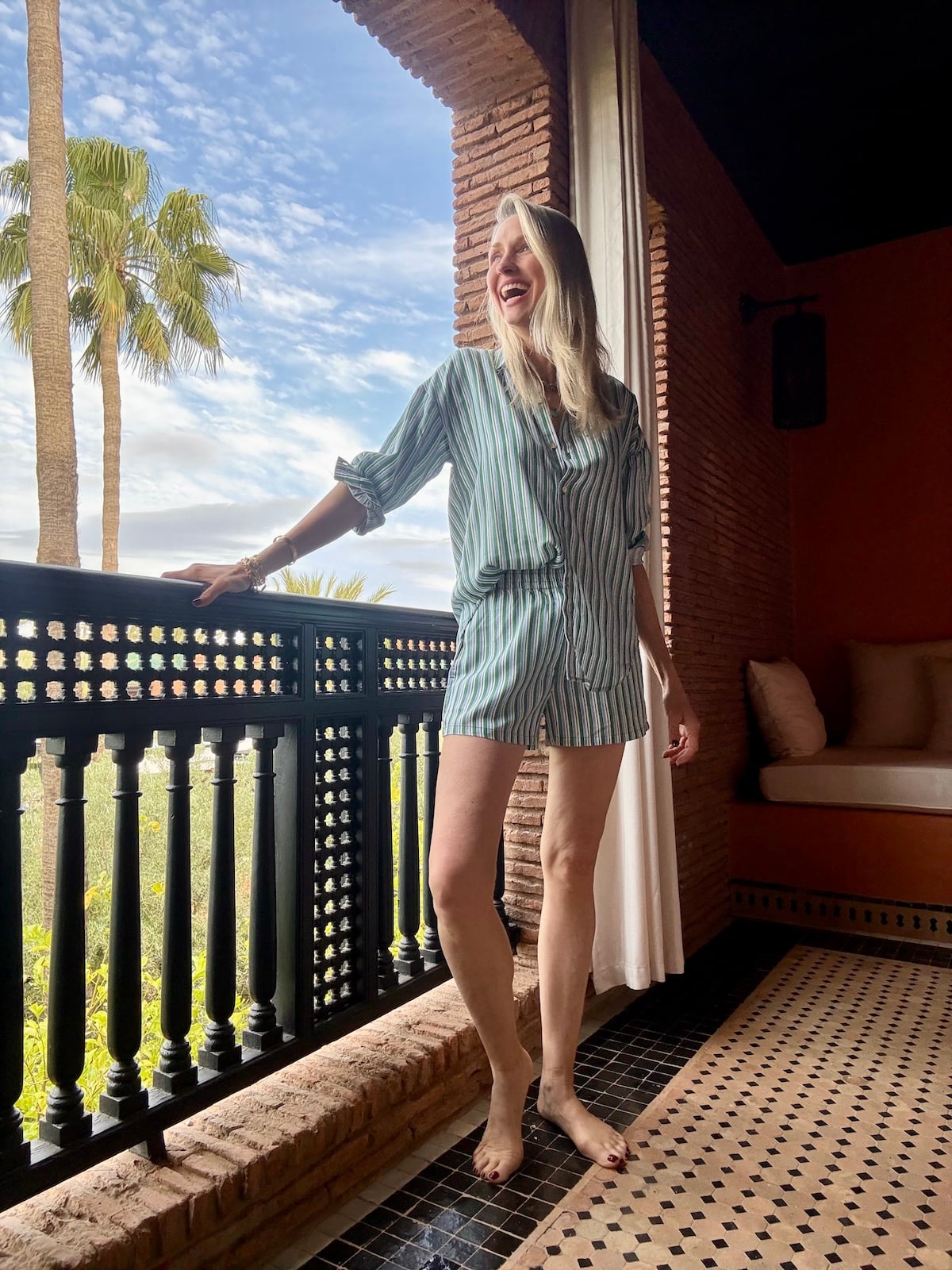
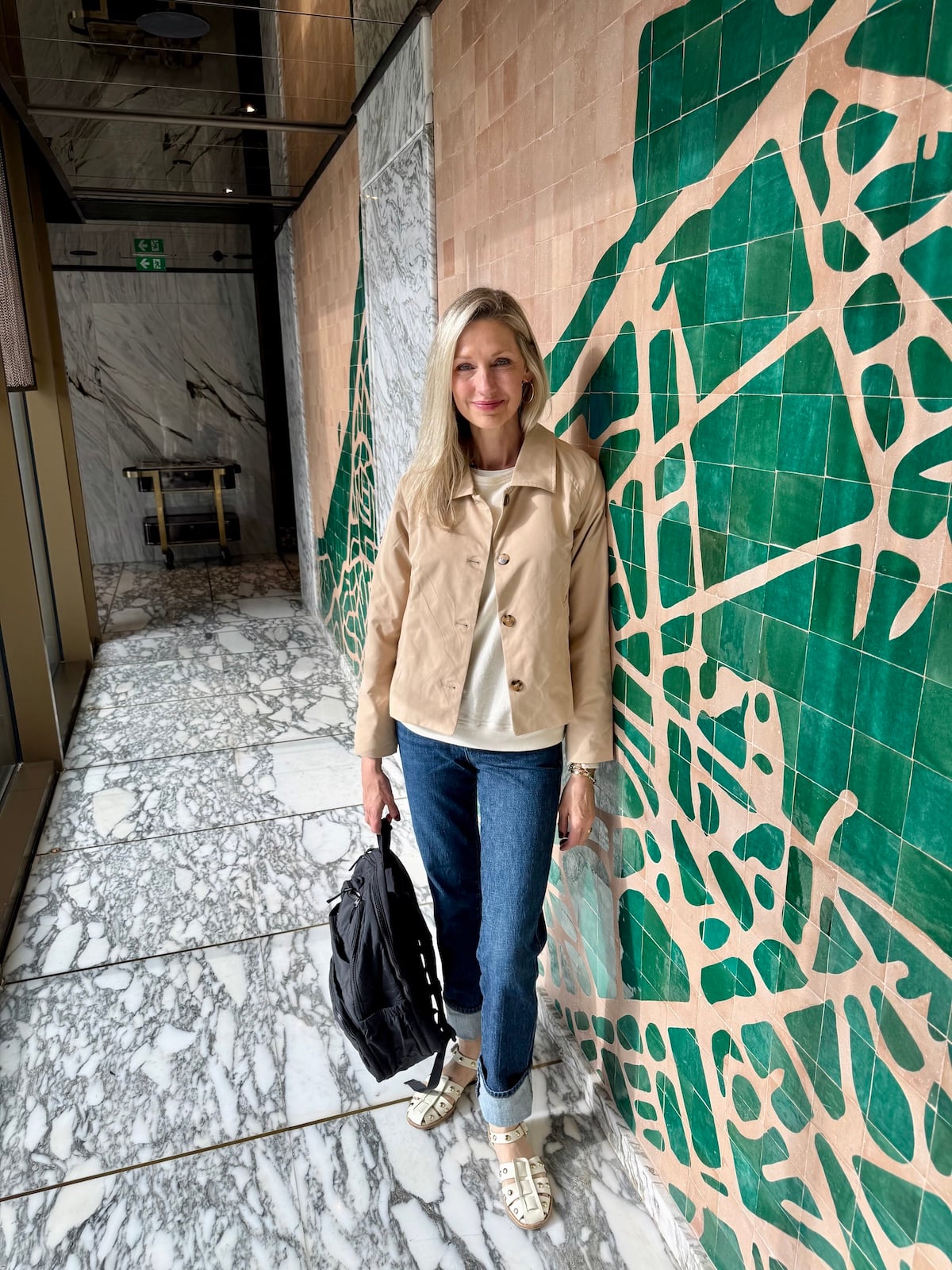
To make packing easier, I saved all the outfits I wore during our trip to Morocco in my ShopMy closet. I always look for pieces that are comfortable, travel-friendly, and easy to take from sightseeing to dinner, and Morocco called for a lot of breathable layers and good walking shoes.
More Trips with the Family

Why Morocco Stays With You
Morocco is one of those rare places that stays with you long after you leave. It’s in the colors of the spice markets, the sound of the call to prayer echoing through ancient medinas, the warmth of mint tea shared around a fire, and the craftsmanship woven into every rug, tile, and doorway.
Every city felt completely different from the next, yet together they created an incredibly rich tapestry of culture, history, food, art, and hospitality. Taking it all in with my dad made it even more special.
I left feeling inspired, creatively energized, and already thinking about planning the return trip. Next time with my kids and husband. Morocco, we’ll be back!
If you have any questions about our trip, leave them in the comments below. I’d love to answer them!
Want more Weelicious? Subscribe to my newsletter and follow me on Instagram, Facebook, and TikTok for all the newest recipes!