
This post may contain affiliate links. Please read our disclosure policy.
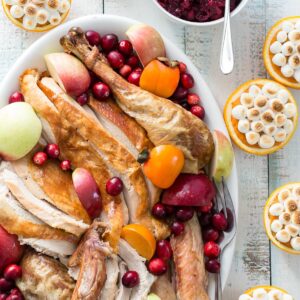
If you haven’t brined a turkey for Thanksgiving, you’re missing out! Brining gives you the juiciest, most flavorful turkey ever—and once you try it, there’s no going back. This is hands-down The Best Brined Turkey Recipe!
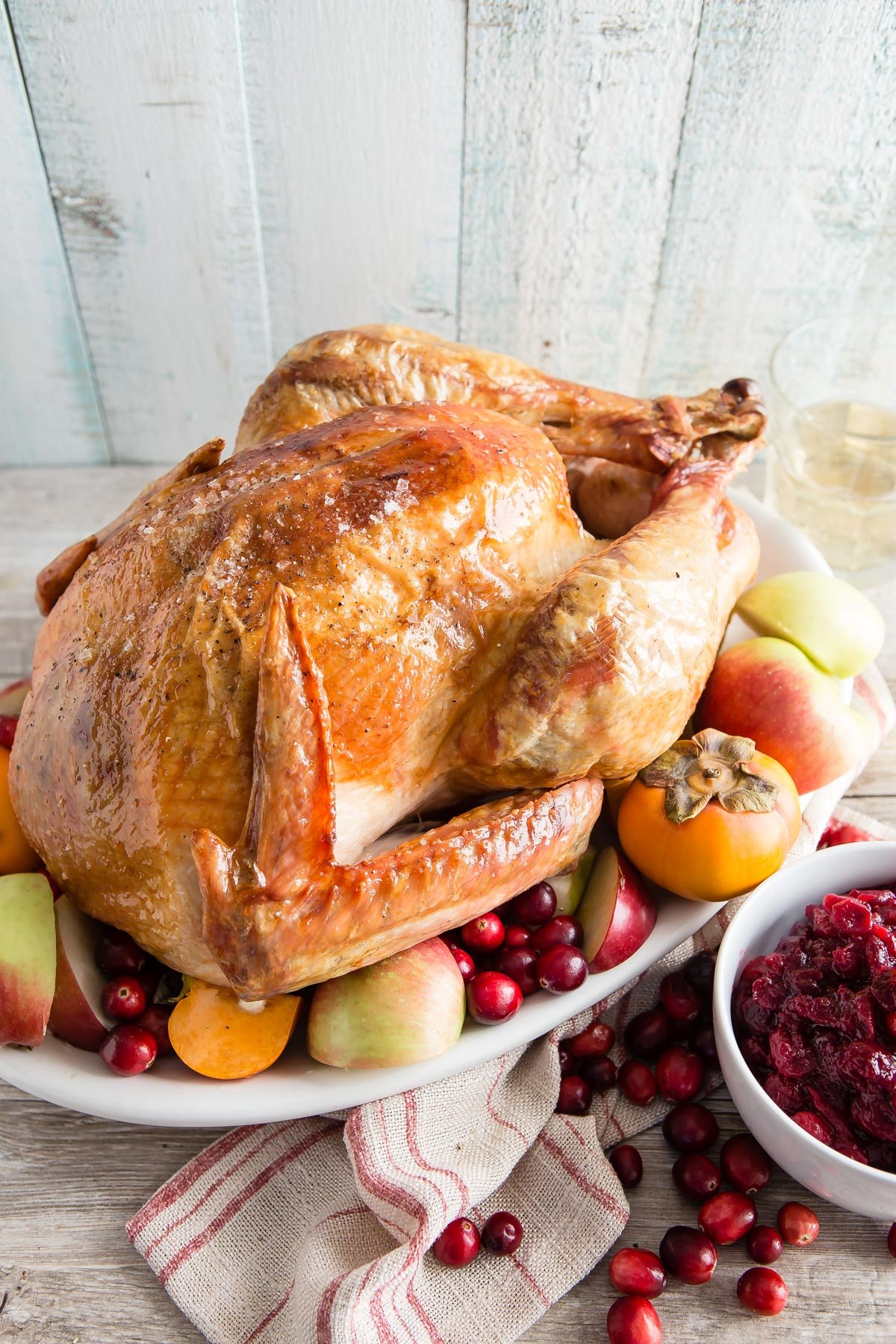
Table of Contents
Why I Love This Recipe
- Adds Incredible Flavor: Brining infuses the turkey with seasonings that go straight into the meat. The salt in the brine also tenderizes, giving you super juicy, melt-in-your-mouth turkey!
- Low Effort: Just place the turkey in a large container with the seasoned brine, and let it work its magic—no constant monitoring needed!
- Feeds a Crowd: This brined turkey is perfect for Thanksgiving and is the best centerpiece for your Thanksgiving sides! It’s economical, stretches for days, and I’ve got delicious ideas for leftovers, like Turkey Potato Croquettes, Leftover Thanksgiving Turkey Shepherd’s Pot Pie or a simple Turkey Cranberry Bagel Sandwich.
The Ingredients
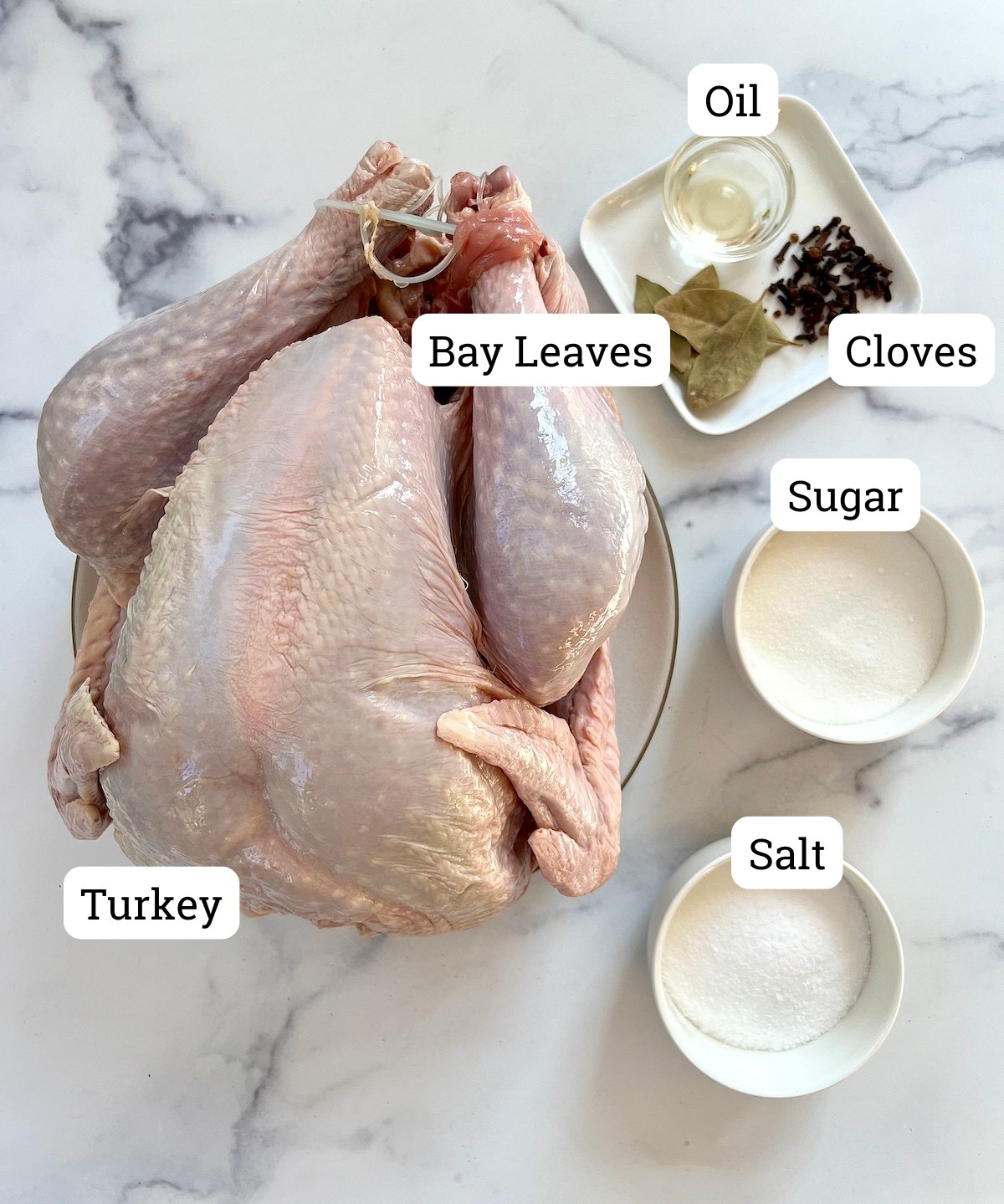
- Turkey: Watch for those deep sales at the grocery store. I try and have enough room in my freezer to purchase a second turkey for a few months later.
- Salt: Kosher salt dissolves beautifully in water, and makes a lovely clear brine. This is the perfect brining liquid!
- Sugar: Keep the ratio to salt as listed below. This helps balance out any saltiness you might taste, but the turkey won’t taste sweet.
- Seasoning: I love the simple taste of bay leaves and cloves. Make sure your spices are fresh (potent!) and I prefer using their whole form.
Substitutions and Variations
- Seasonings: You could also toss in some onion (peeled and quartered), cinnamon stick, apple (quartered, but not peeled), celery, or basically any flavors you love.
- Different cuts: If I’m going to the trouble of roasting a turkey, I love to use the entire bird. However, you can also do this with a bone-in breast simple and try a simple Roast Turkey Breast for a smaller meal. Whichever route you go, don’t forget to make Turkey Gravy from the drippings!
How to Make Brined Turkey
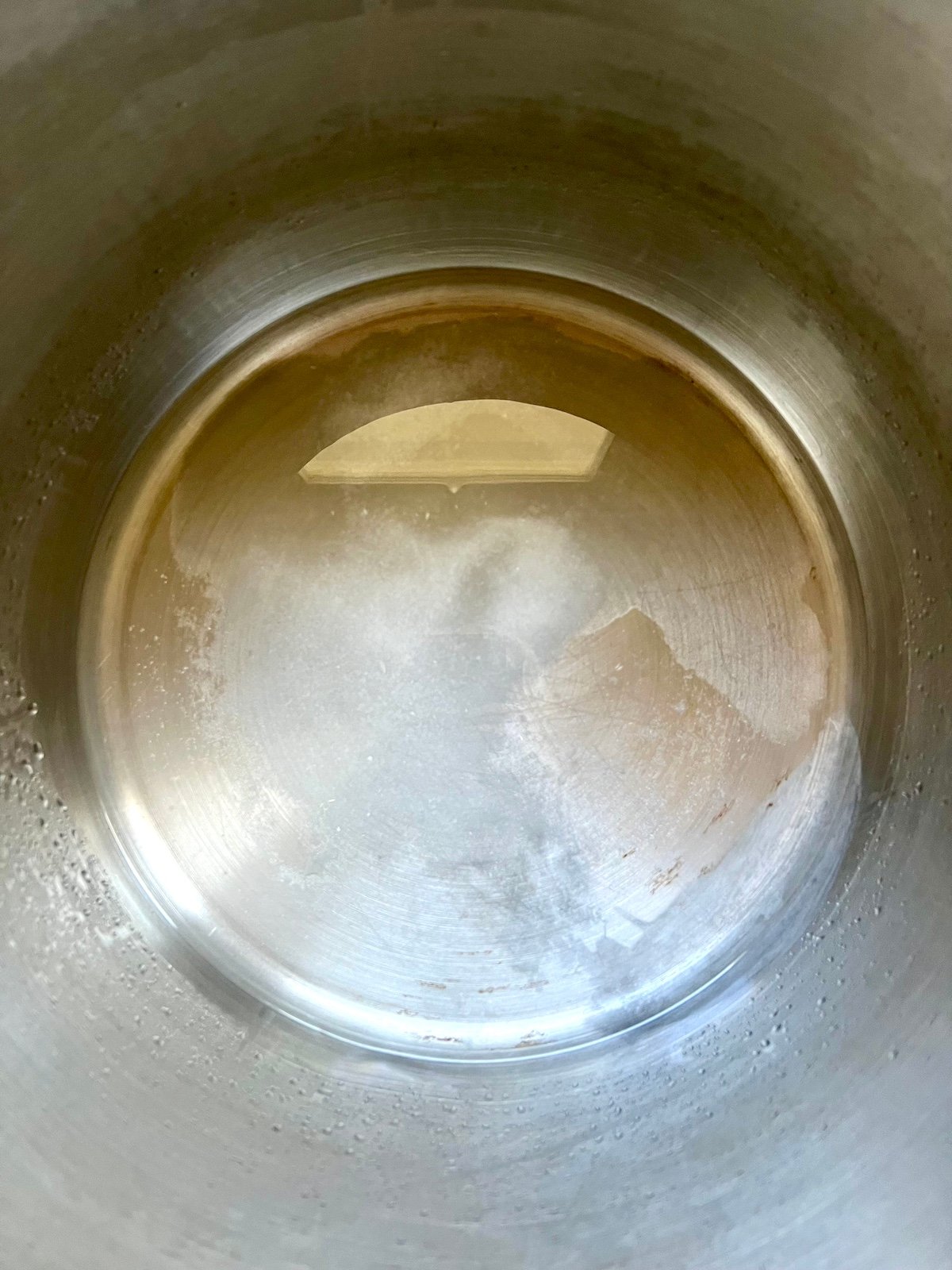
Step 1: Place the sugar and salt in hot water. Stir until the sugar and salt dissolve.
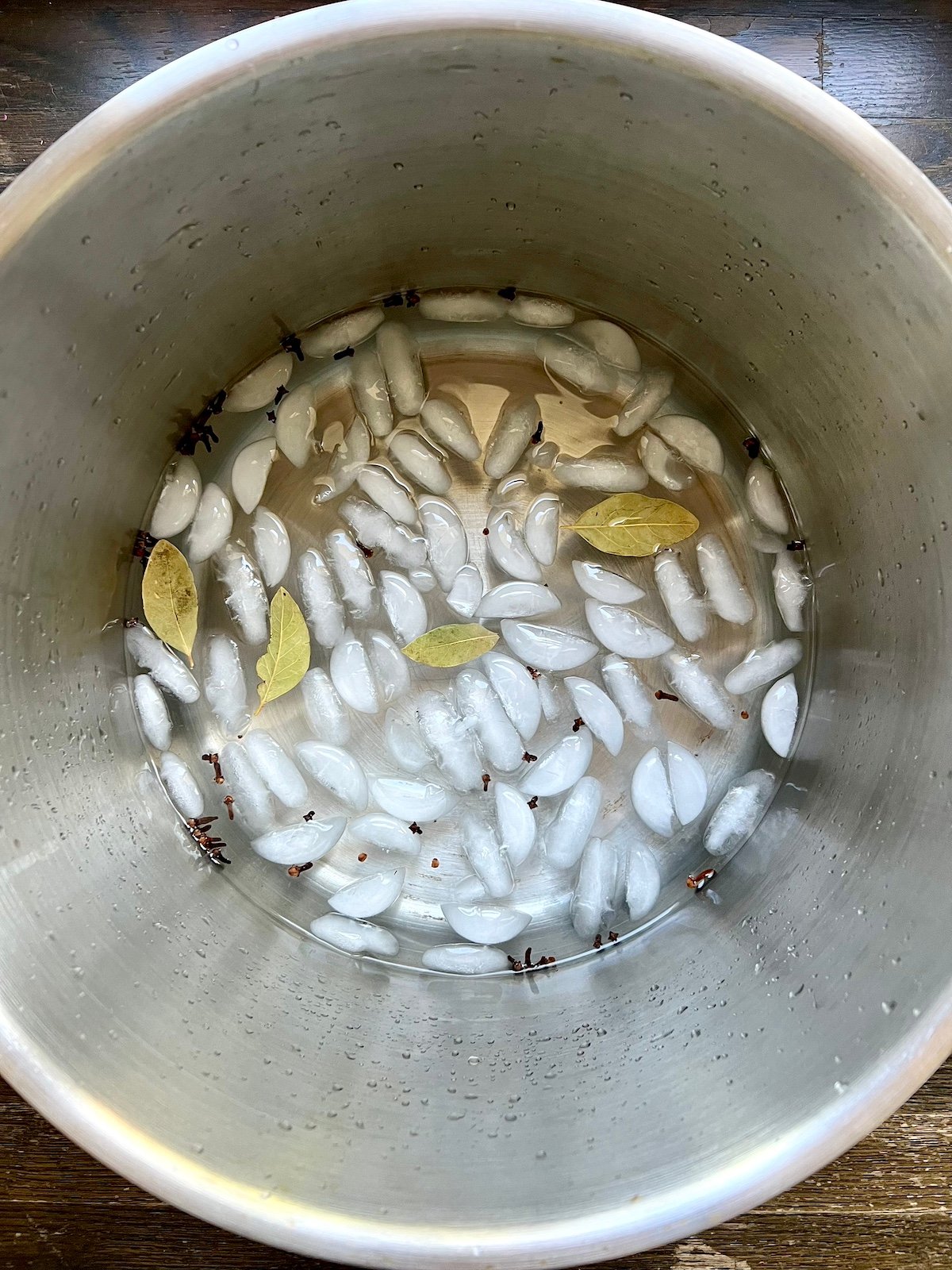
Step 2: Place the brine in a large stock pot with a gallon of cold water, the cloves, bay leaves and a handful of ice to make sure the water is cold. Stir to combine.
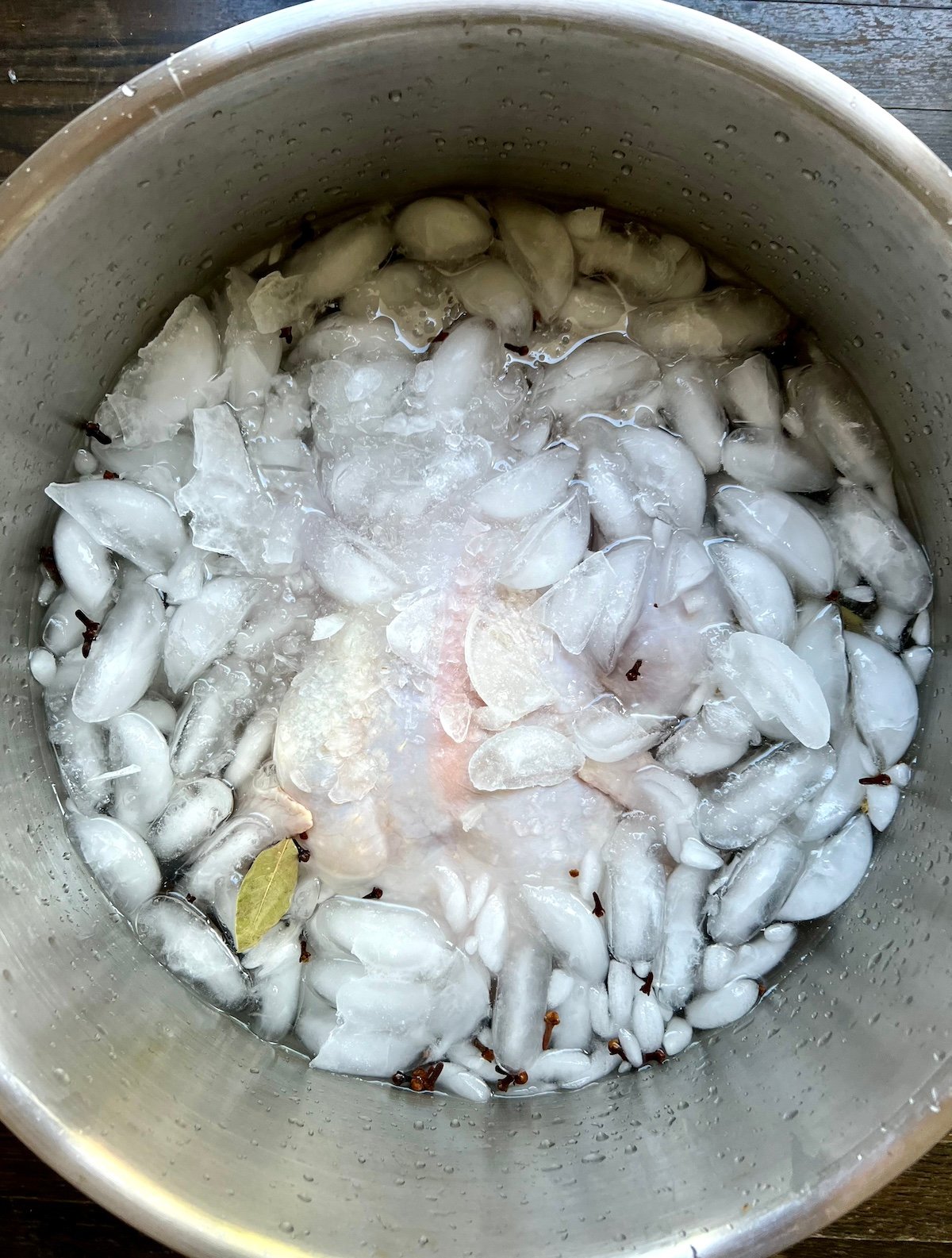
Step 3: Place the turkey breast side down in the stockpot with brine. You want the water to just cover the turkey.
Step 4: Refrigerate 18-48 hours (or set it in a cool safe place outside as long as it’s below 55 degrees outside).
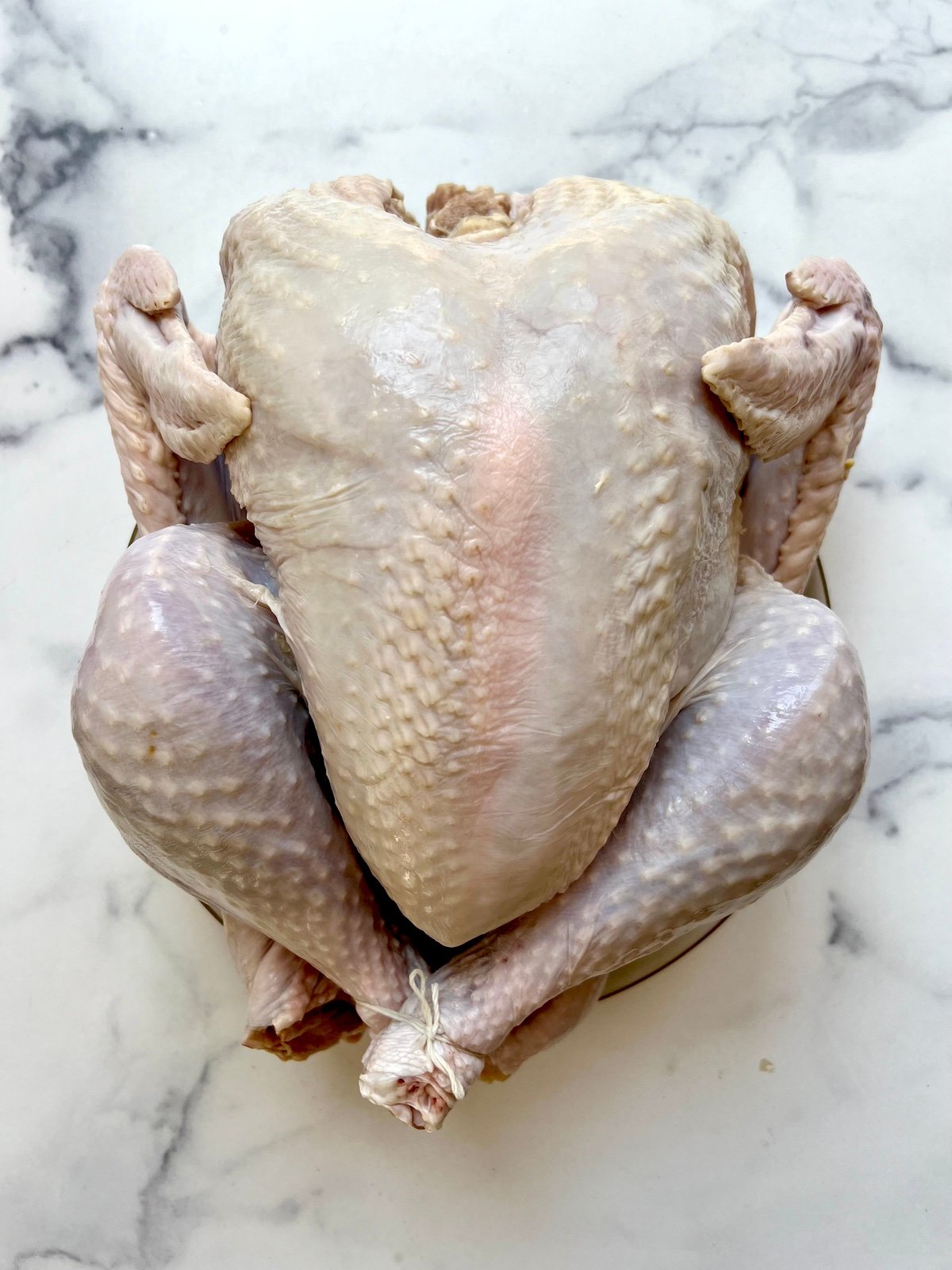
Step 5: When ready to roast, preheat the oven to 450°F. Take the turkey out of the brine, discarding the brining liquid.
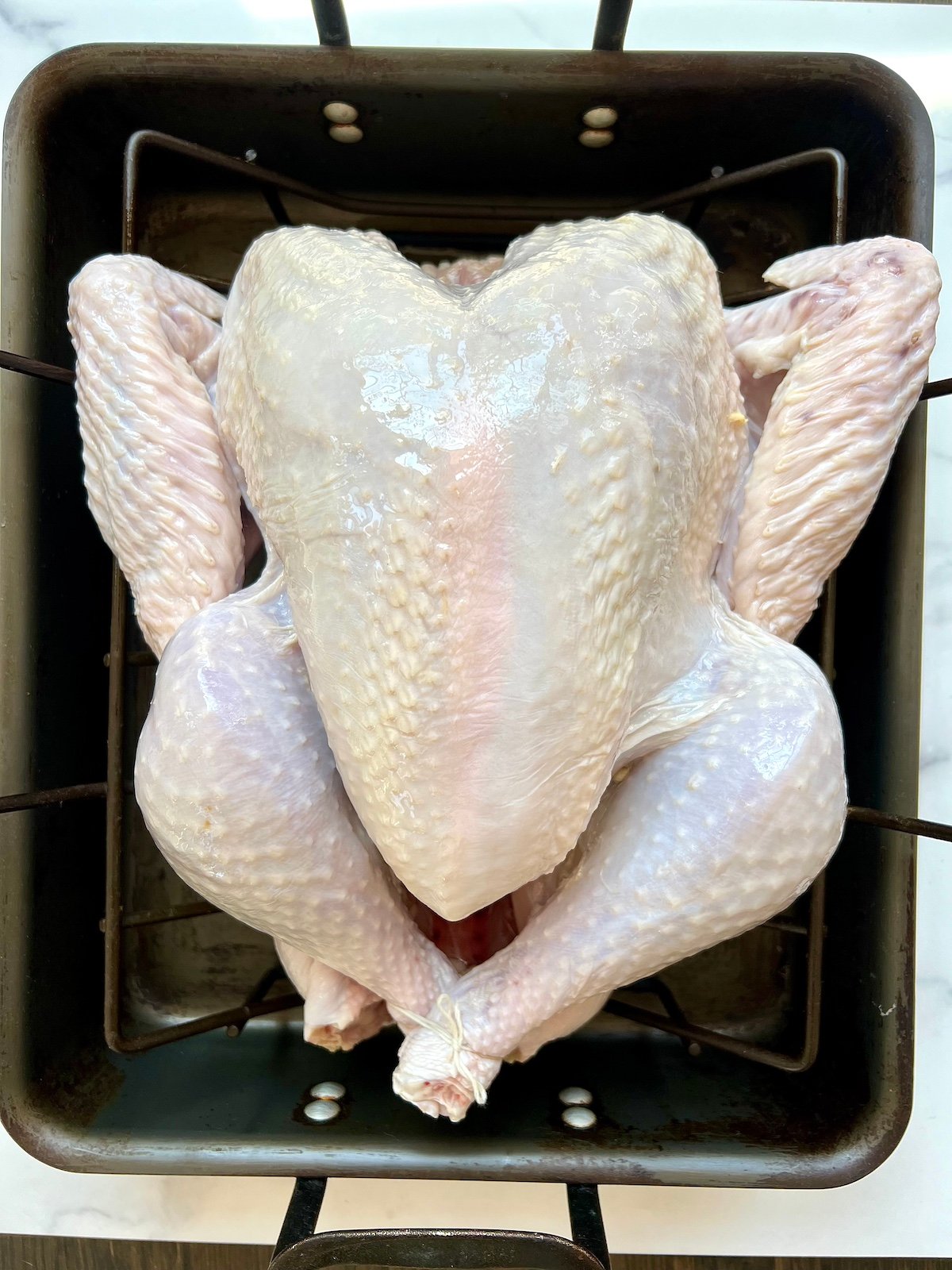
Step 6: Place the turkey on a roasting rack inside a wide low pan and blot the turkey dry with a paper towel. Tuck back the wings and rub the skin of the turkey with the oil.
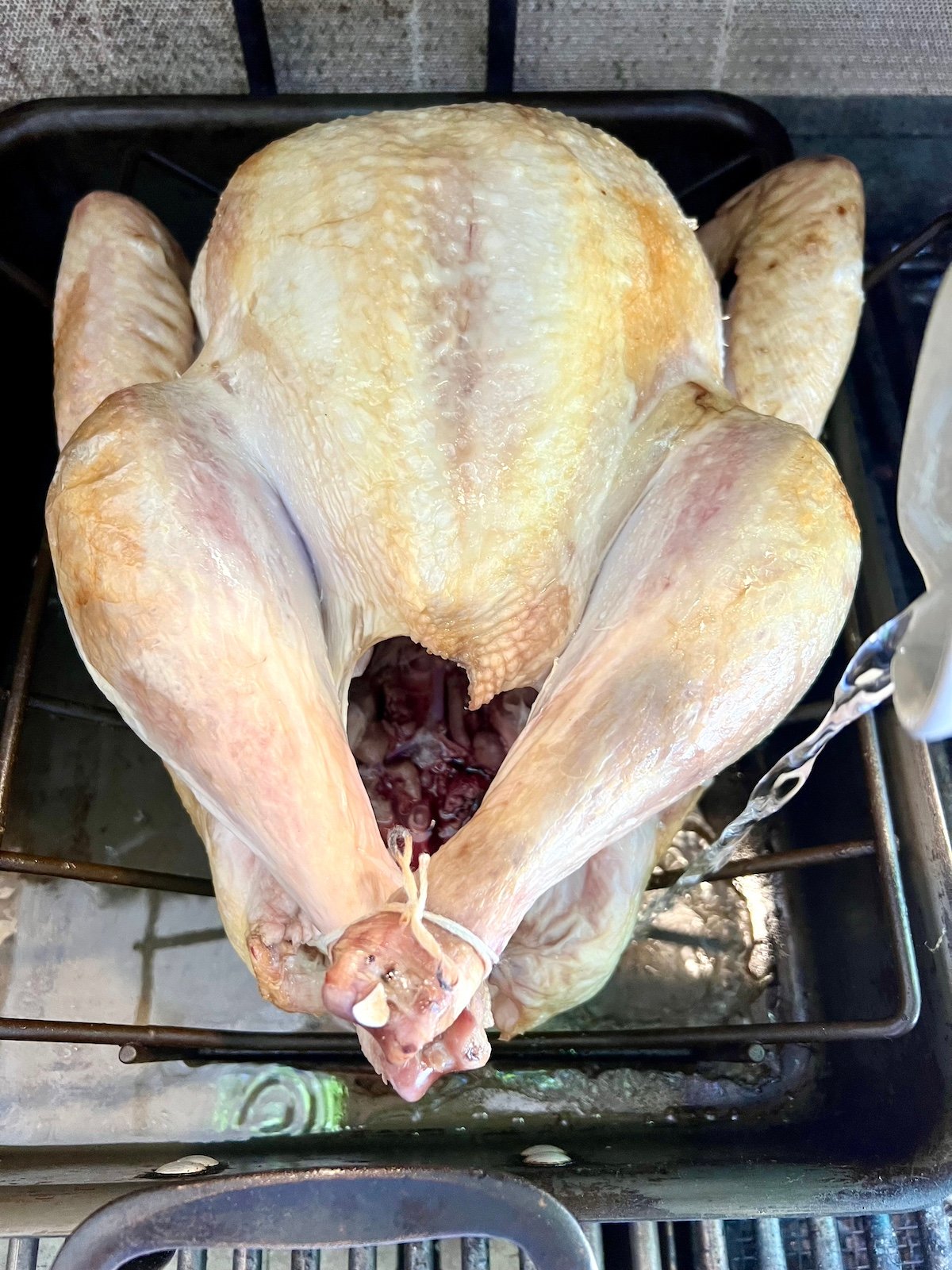
Step 7: Roast on the lowest rack of the oven for 30 minutes. Remove from the oven and add 1 cup of water to the roasting pan.
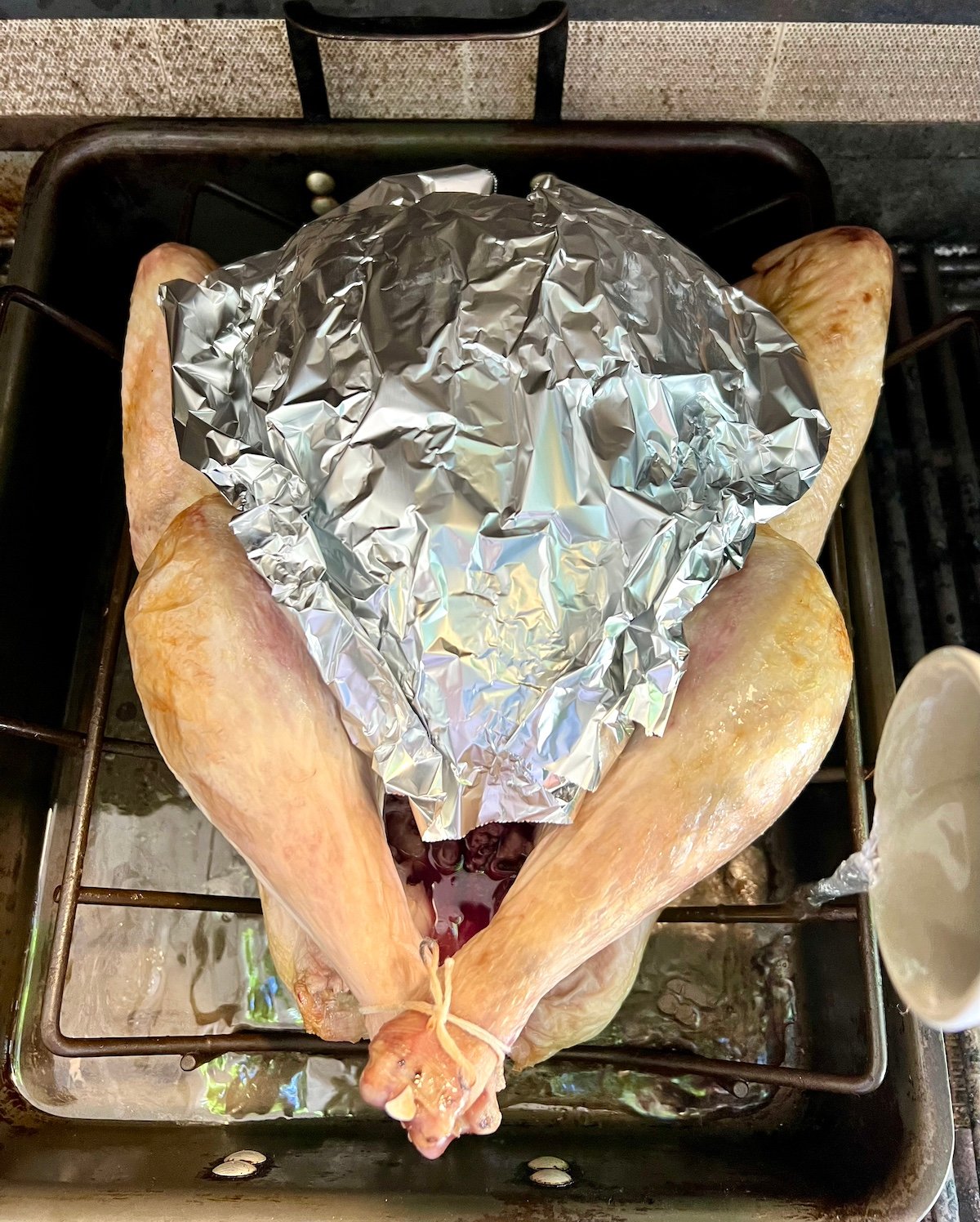
Step 8: Cover the breast with foil so it doesn’t dry out. Reduce oven temperature to 350°F. Continue to roast for 1 hour.
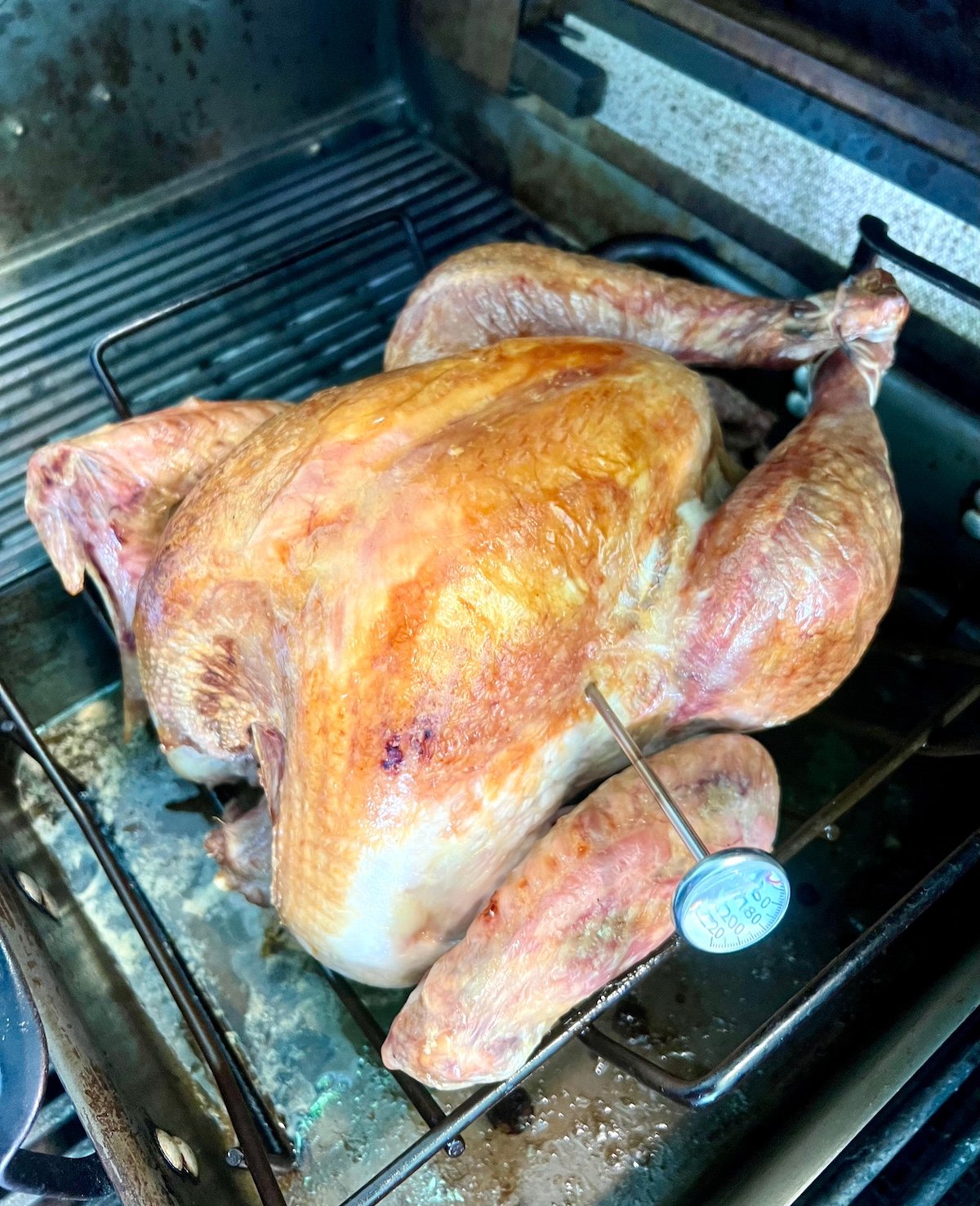
Step 9: Remove the foil from the breast and cook another 15-30 minutes. Insert a meat thermometer and cook until the turkey reaches 160-165 degrees. The total cooking time in the oven will be 1 hour 45 minutes to 2 hours total depending on the size of your turkey.
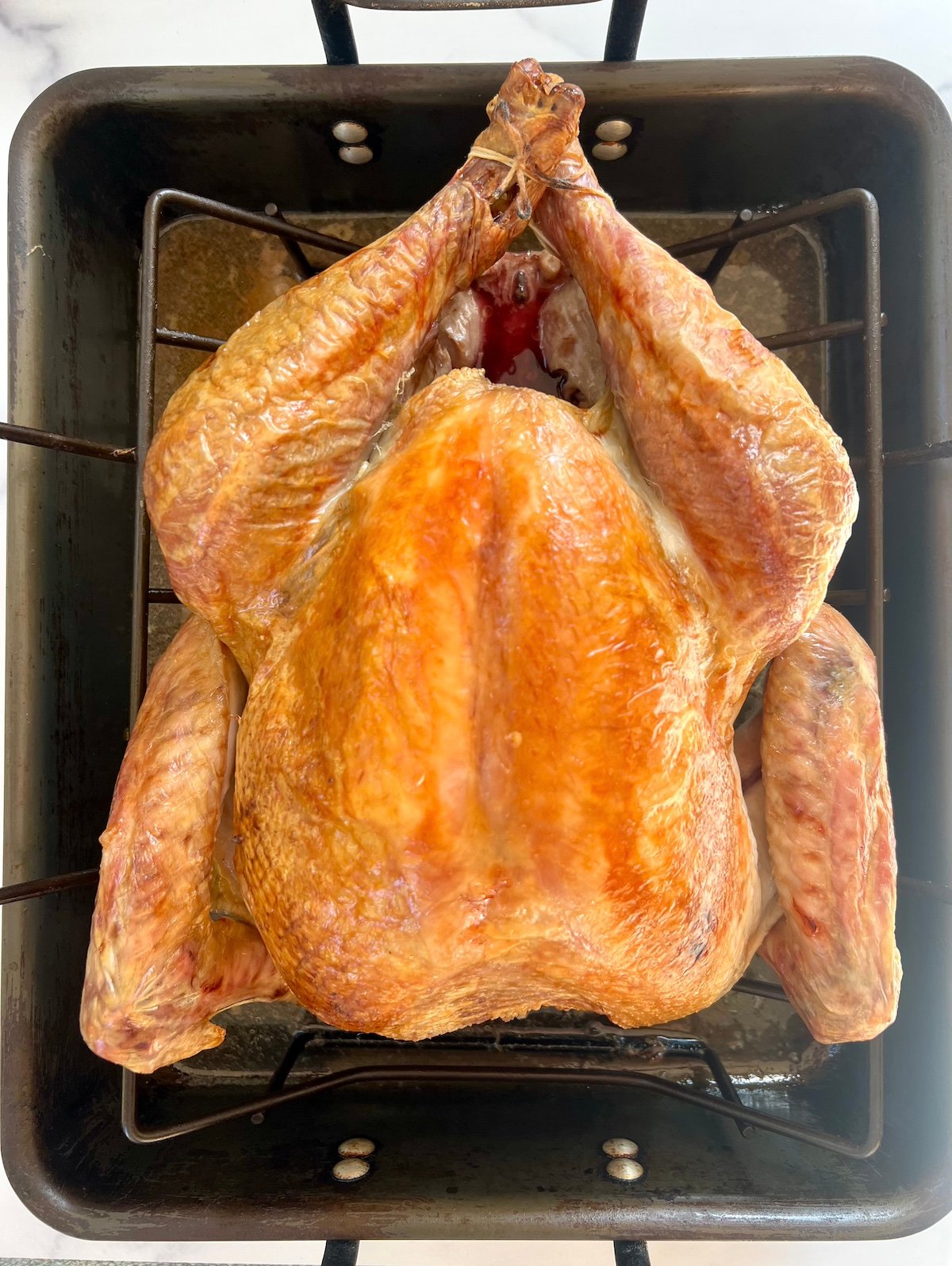
Step 10: Allow the turkey to rest for 20-30 minutes before slicing and serving.
How to Brine a Turkey Video
Tips and Tricks
- Get outside: After making the brine and placing it in a large pot with the turkey, I cover it and leave it outside overnight. It’s usually 55 degrees or lower in most of the U.S. this time of year, so it’s the perfect temperature to brine.
- Always use a thermometer: Dark and white meat like to cook at different rates, so taking the temperature in a few spots ensures your turkey is safely cooked.
FAQs
165°F is the standard for cooking poultry. However, remove your turkey from the oven once it is at an internal temp of 160°F. The temperature will continue to rise from residual cooking as it rests. Resting is essential as it allows the juices to redistribute in the meat. If you cut into it immediately, the juice will all run out onto your cutting board.
I highly recommend checking out some YouTube videos for this. Essentially you want to start with removing anything sticking off – meaning the legs and thighs, plus the wings. This then gives you a stable base of the breast to make beautiful slices from. It’s also a great idea to cut in the kitchen where you can focus, and bring out a tray of ready-to-serve meat.
Gravy is a kitchen essential you need to teach yourself today! It’s really very simple, and once you master it you can make a pan gravy from any sort of meat that you roast, whether it is chicken, turkey, or beef. You can easily make a roux and use pan drippings plus broth, or if your turkey had the giblets in a packet, I can walk you through Turkey Gravy using those.
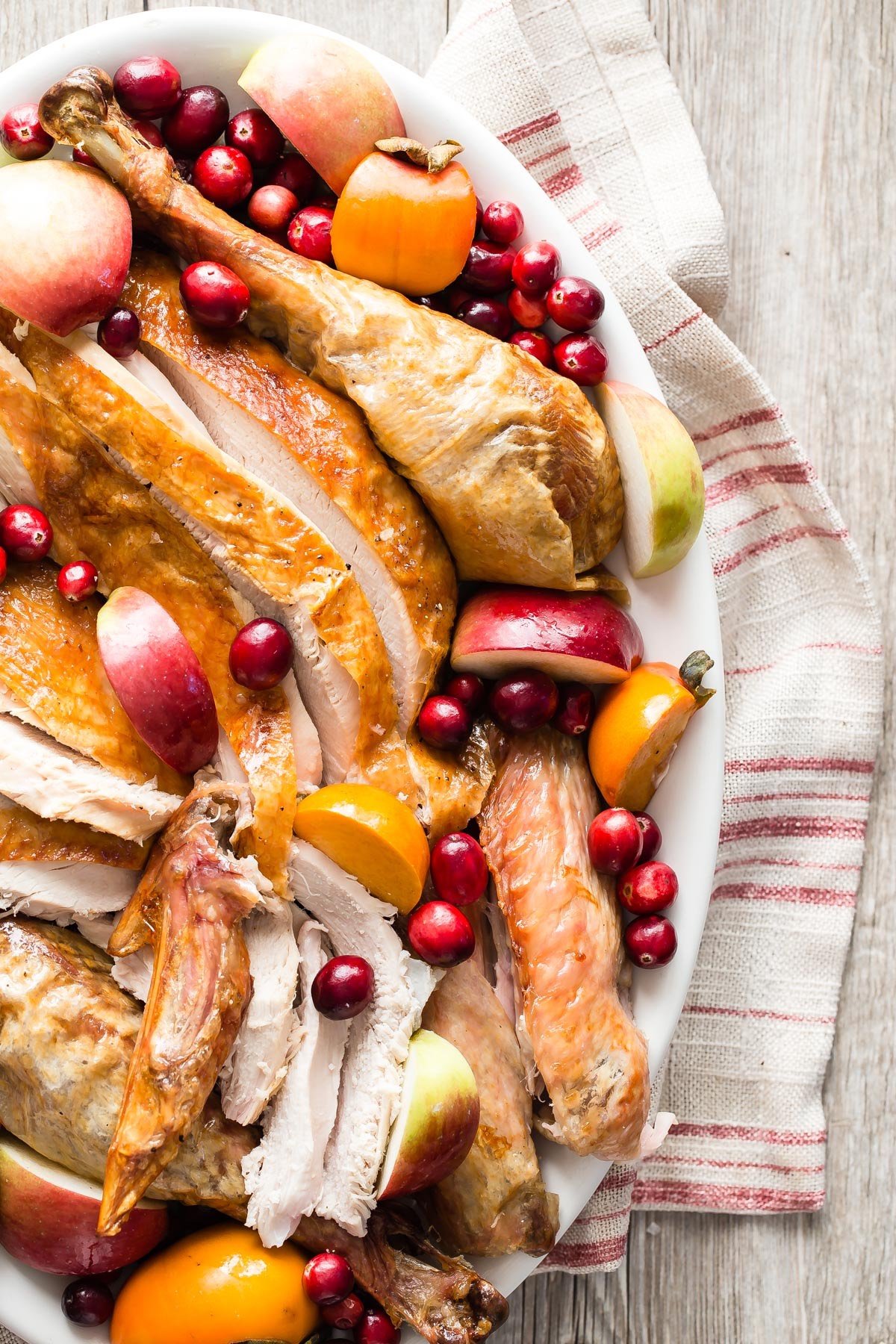
More Ways to Cook Turkey


Brining your Thanksgiving turkey is the best way to guarantee juicy, tender and flavorful turkey every time. Plus, it’s a fun activity that kid’s can help with! Let me know if you brine your turkey this year, and feel free to ask any questions in the comments!
Want more Weelicious? Subscribe to my newsletter and follow me on Instagram, Facebook, and TikTok for all the newest recipes!
Would you like to save this?
The Best Brined Turkey
Ingredients
- water
- 1 cup sugar
- 1 cup kosher salt
- 1 10-12 pound turkey, defrosted
- 4 cloves
- 4 bay leaves
- 1 tablespoon vegetable or canola oil
Instructions
- Place the sugar and salt in 4 cups of hot water. Stir until the sugar and salt dissolve.
- Place the brine in a large stock pot with a gallon of cold water, the cloves, bay leaves and a handful of ice to make sure the water is cold. Stir to combine.
- Place the turkey breast side down in the stockpot with brine. You want the water to just cover the turkey.
- Refrigerate 18-48 hours (or set it in a cool safe place outside as long as it’s below 55 degrees outside).
- When ready to roast, preheat the oven to 450°F.
- Take the turkey out of the brine, discarding the brining liquid.
- Place the turkey on a roasting rack inside a wide low pan and blot the turkey dry with a paper towel.
- Tuck back the wings and rub the skin of the turkey with the oil.
- Roast on the lowest rack of the oven for 30 minutes and then place a piece of foil just over the breast of the turkey to cover. The breast cooks faster then the legs and wings so this process helps it to cook more evenly.
- Pour 1 cup of water in the pan, reduce temperature to 350°F and continue to roast 1 hour.
- Remove the foil from the breast and cook another 15-30 minutes. Insert a meat thermometer into the deepest part of the thigh (avoiding the bone) to reach a temperature of 160-165 degrees. The turkey will continue to cook a little even after you take it out of the oven (the total cooking time in the oven will be 1 hour 45 minutes-2 hours total).
- Let the turkey rest for 20-30 minutes (this is an essential step to allow the juices to redistribute and settle).
- Slice and serve.
Video
Notes
- Get outside: After making the brine and placing it in a large pot with the turkey, I cover it and leave it outside overnight. It’s usually 55 degrees or lower in most of the U.S. this time of year, so it’s the perfect temperature to brine.
- Always use a thermometer: Dark and white meat like to cook at different rates, so taking the temperature in a few spots ensures your turkey is safely cooked.
- Internal Temperature: 165°F is the standard for cooking poultry. However, remove your turkey from the oven once it is at an internal temp of 160°F. The temperature will continue to rise from residual cooking as it rests. Resting is essential as it allows the juices to redistribute in the meat. If you cut into it immediately, the juice will all run out onto your cutting board.


I made this last year and it was the best turkey many of my family and friends had had. It was my first turkey, so I was pretty impressed with myself! One word of caution to any other rookies out there. It may be obvious to the experts, but clearly wasn’t to me. DO NOT make gravy from the roasting pan of a brined turkey!!! WAY TOO salty!!!
I’ve never had a chance to make my own turkey, but when I do, I will definitely be brining!
The rule of thumb is 1 1/2 – 2 hours total cooking time for a 9-18 pound bird, 2 – 3 hours for a 18-22 pound bird, and 3-4 hours for a 22-24 pound bird following the heating guidelines in this recipe. Make sure a thermometer inserted into the thigh reaches 160-165 Degrees F!
I would love to try this. For an 18 pound turkey how do I increase cooking time and ingredients??
Did anyone figure out the times for a bigger turkey?
I am huge fan of brining. We always do this every year and throwing in chopped celery, onions and carrots help too. How long would you cook a 18-20 lb. Turkey? 2 hours doesn’t seem like enough.
Make sure there is always ice in the bucket! If you have a mixture of ice and water, the ice will keep everything at a cooler temperature!
Thank you for this post! I am excited to try it. One question – you state it is ok to leave the turkey outside over night at max 55 degrees – however that is about 15 degrees into the “temperature danger zone.” Does this work because of the high amount of salt? It inhibits bacteria growth? Thank you for insight. 🙂
Okay, seriously. Could a child get any cuter?
This is super awesome if you cook it in a crockpot roaster, no need to carve it falls off the bone
It is soaking something (usually meat) in a flavorful liquid for a period of time, usually longer than four hours!
Catharine What is Brining?
can regular salt be used if i don’t have kosher? i just want to know before i make a store run. also, if i have an 8lb turkey, do i have to let it sit for 24hrs? there’s only 3 of us, so we didn’t do anything big.
For a turkey that big, I would add an extra half cup of sugar and salt and some extra cloves and bay leaves.
I have a question…
If you have a 24 lb turkey, is it the same amount of salt, sugar, cloves & bay leaves?
Thanks,
Crystal
Hi Catherine,
Would the brining process work the same way with just a turkey breast?
Thanks!
-Suzanne